Why Upgrading Your Septic Outlet Pipe to Schedule 80 Matters
Learn why upgrading a septic tank outlet from ABS to Schedule 80 pipe can give you a long-lasting, watertight seal and protect your entire septic system.
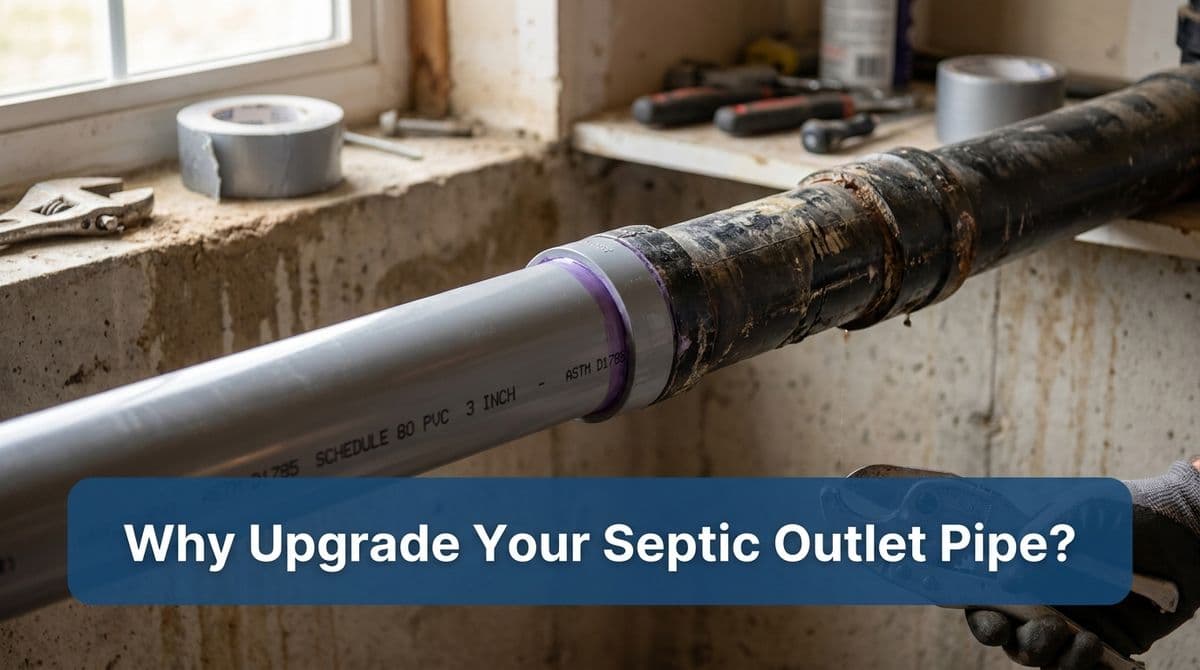
Why We Recommended Upgrading a Septic Outlet Pipe
We recently got a call from a customer — let’s call him Mark — who wanted to know what our crew had found after inspecting his septic system a couple of days earlier.
Mark’s septic tank had been acting up, and our technician discovered that the outlet pipe coming out of the tank was ABS plastic. The problem? That ABS connection at the tank wall was no longer providing a reliable, watertight seal. Over time, that can mean leaks, groundwater getting in, or effluent leaking out — none of which you want happening in your yard.
When Mark called the office to get the rundown, we explained why we were recommending replacing that ABS section with Schedule 80 pipe and rebuilding the outlet connection properly. His questions on the phone are the same ones we hear from a lot of homeowners, so I thought I’d walk through them here.
What Does the Septic Tank Outlet Pipe Actually Do?
Inside your septic tank, solids settle to the bottom, oils and grease float to the top, and the relatively clear liquid in the middle (called effluent) needs to leave the tank and flow to your drainfield.
The outlet pipe is what carries that effluent out of the tank and into the rest of the system. Around that pipe, built into the tank wall, is where we need a durable, watertight seal so nothing can sneak in or out.
When that connection starts to fail, you can run into problems like:
- Infiltration: Groundwater getting into the tank, which can overload the system.
- Exfiltration: Effluent leaking out before it reaches the drainfield, potentially contaminating soil or groundwater.
- Structural stress: A loose or poorly supported outlet can crack, sag, or separate over time.
That’s exactly the concern we had at Mark’s place — the ABS outlet just wasn’t a great candidate for restoring a long-term, watertight seal.
ABS vs. Schedule 80: Why Material Matters at the Tank
Mark’s first reaction on the phone was understandable: “Do you really have to dig up the whole pipe? That thing runs across my entire yard!” Thankfully, the answer was no. We only needed to replace the section right next to the tank and then tie into his existing line.
The key issue was the outlet material:
- ABS pipe (usually black) is common in older installations and light-duty plumbing. It’s rigid, but not as thick or robust as some higher-grade options. The way it connects at the tank can make it harder to rebuild a truly watertight, long-lasting seal once it’s been compromised.
- Schedule 80 PVC is a much heavier-duty material. The walls are thicker, it’s more resistant to impact and stress, and it’s better suited for critical connections right at the tank wall.
At Mark’s home, we recommended cutting out the ABS at the tank and replacing that section with Schedule 80, solvent-welded (often casually called “soldered”) so that the joint is chemically fused together. That’s what gives you the watertight, structurally sound connection you want on a septic outlet.
What the Upgrade Process Actually Looks Like
Another of Mark’s questions was whether we’d be bringing in a mini excavator. Sometimes we do, but for his job, the outlet wasn’t very deep, and bringing in equipment would have only added to the cost. Instead, we planned to send a two-person crew to dig by hand.
Here’s the general process we follow on a repair like this:
- Call 811 and locate utilities. Any time we dig, we contact the utility locate service first. This is why we scheduled Mark’s job a few days out instead of “tomorrow.” Safety first.
- Excavate around the outlet. We expose the tank wall, the outlet penetration, and enough of the existing pipe to make a proper connection.
- Remove the failing ABS section. We carefully cut out the compromised pipe near the tank.
- Install Schedule 80 and rebuild the seal. Using Schedule 80 fittings and solvent cement, we create a tight, fused assembly at the outlet. Then we transition back to the existing line further out.
- Test for leaks and proper slope. Before backfilling, we confirm that everything is draining correctly and that the joint is watertight.
- Backfill and restore the area. Finally, we backfill in layers, compact the soil, and clean up the work area.
In Mark’s case, this approach kept the repair under his estimate cap and avoided tearing up his entire yard.
Why a Watertight Outlet Seal Is Worth the Investment
Mark joked on the call that even “good news” repairs still cost money, and he’s right — but this is one of those spots where a solid fix now can prevent a much bigger bill later.
Upgrading to a Schedule 80 outlet assembly helps:
- Protect your drainfield from being overloaded by excess groundwater.
- Prevent contamination from leaks near the tank.
- Extend the life of your system by reducing strain on every component downstream.
- Avoid repeat digs in the same area because of a patchwork repair that didn’t last.
When we talk about “long-lasting, watertight” connections, this outlet area is near the top of the list. It’s not the flashiest part of your system, but it quietly does a lot of work.
How to Know If Your Outlet Pipe Needs Attention
You won’t usually see your septic outlet pipe, but there are some signs it might be time for a closer look:
- Recurring backups or slow drains even after pumping
- Wet or soft ground consistently near the tank
- Strong sewage odors around the tank area
- Evidence of previous “quick fixes” at the outlet that are failing again
The only way to know for sure is to have a professional expose and inspect that area. If we find ABS or another material that isn’t holding a watertight seal, we’ll usually recommend something similar to what we proposed for Mark: replace the weak link with Schedule 80 and rebuild the connection correctly.
Thinking About a Septic Outlet Upgrade?
If you’re hearing about issues with your outlet pipe, or your system just isn’t performing like it used to, we’re happy to take a look. We’ll walk you through exactly what we find, explain whether a Schedule 80 upgrade makes sense, and give you a clear estimate before we dig a single shovelful of dirt.
You don’t have to wait until you have standing water in the yard. A proactive repair at the tank outlet is one of the smartest ways to keep your septic system working smoothly for years to come.