How to Spot Invisible Irrigation Leaks Before Damage Grows
Getting water usage alerts but seeing no puddles? Learn how we spot and troubleshoot invisible irrigation leaks before they destroy your lawn and spike your bill.
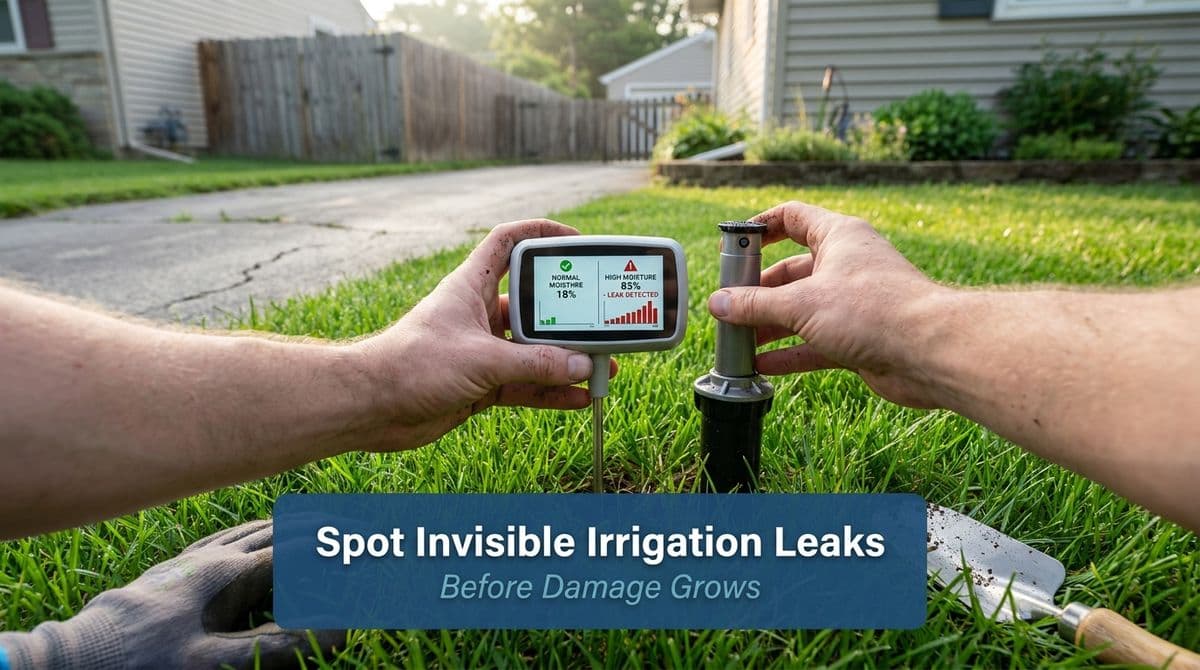
How One “Invisible” Irrigation Leak Nearly Killed a Lawn
We recently got a call from a homeowner — let’s call her Laura — who owns a vacation home with a beautifully landscaped yard. She hadn’t been at the house for a few weeks, but her water company kept sending alerts: “Above average usage detected.”
Laura started tracking her usage in the customer portal and noticed a pattern: the spikes only happened when the irrigation system was running. No soggy spots in the yard, no water in the house, nobody using the showers or toilets — but somehow, the system was dumping around a thousand gallons during watering cycles.
By the time Laura called us, she’d shut the irrigation off to stop the waste, but the weather was hot and her lawn was starting to crisp up. That’s a tough spot: keep watering and waste water, or shut it down and watch the lawn die. We see this scenario a lot, so we thought we’d walk you through how we spot and troubleshoot “invisible” irrigation leaks before they destroy your lawn or your water bill.
Step 1: Confirm It’s Really an Irrigation Leak
When someone calls us with a suspected leak, we start the same way we did with Laura — by asking questions to rule out the usual suspects inside the home.
Here are the checks we typically recommend before you focus on irrigation:
- Toilets: Listen for running water, jiggle the handle, or add a few drops of food coloring to the tank and see if it seeps into the bowl without flushing.
- Water heater and under-sink areas: Look for dampness, corrosion, or a faint hissing sound from valves and pipes.
- Appliances: Inspect around dishwashers, refrigerators with ice makers, and washing machines for moisture or slow drips.
In Laura’s case, she’d already done this homework. She’d confirmed that water usage only spiked when the irrigation was on. That’s a strong clue that the leak is on the irrigation main line or one of the zones, not inside the house.
Step 2: Use Your Meter Like a Detective Tool
You don’t need fancy equipment to start narrowing things down. Your water meter is one of the best leak detection tools you already own.
Here’s how we often coach homeowners to test for an irrigation leak:
- Turn everything off. Make sure no one is using water inside — no showers, laundry, or dishwashers.
- Check the meter. Most meters have a small “leak indicator” dial that spins with even tiny flows. If it’s spinning with everything off, you’ve got a leak somewhere.
- Shut off the irrigation main valve. This is usually near the backflow preventer or in a mechanical room/valve box.
- Check the meter again. If the indicator stops when you shut off the irrigation, that points strongly to a silent irrigation leak.
On many properties, we’ll run almost the exact same test when we arrive — we just add our acoustic and line-tracing tools to pinpoint where the water is escaping.
Step 3: Look for Subtle Signs in the Yard
Not every irrigation leak gives you a swampy lawn. In fact, Laura had no visible puddles even though she was losing hundreds of gallons. Often, the water is disappearing into sandy or rocky soil, or it’s leaking deep below the surface.
Some of the subtle signs we look for include:
- One area that stays greener: A patch that looks extra lush compared to the rest of the lawn can indicate water below.
- Soft or spongy ground: Step around valve boxes, along main lines, and near heads. A “mushy” feel can reveal a buried leak.
- Sinkholes or depressions: Small dips can form where soil has washed away underground.
- Constantly low pressure on a zone: If one area barely sprays while others are fine, water may be escaping before it reaches those heads.
We’ll usually walk the property while cycling through zones, listening and feeling for these clues as we go.
Step 4: Balance Saving Your Lawn with Stopping the Leak
Laura did what most people do at first: she shut the irrigation off completely. That protects your water bill, but when it’s hot, a lawn can decline fast. When we scheduled her leak locate, we suggested a middle-ground approach, and it’s the same advice we give many customers:
- Shorten run times: Cut each irrigation cycle to the bare minimum needed to keep things alive, not lush.
- Water less often but more carefully: A quick, early-morning cycle is better than running the system in the heat of the day.
- Skip obviously damaged zones: If you suspect one section of the yard is leaking, temporarily cap or shut off that zone if possible.
Our goal is to help you limp the lawn along just enough to survive until we can locate and a repair team can fix the leak. Fully dead turf is much harder and more expensive to bring back than a stressed lawn.
How We Professionally Track Down an Invisible Irrigation Leak
Once we’re on site, we take a systematic approach to finding leaks in irrigation main lines and laterals. While every property is a little different, our process typically looks like this:
- Verify the usage pattern. We’ll confirm with the meter that water only moves when irrigation is running, just like Laura noticed on her customer portal.
- Map the suspected line. Using site plans when available and our locating tools, we determine where the irrigation main and zones are likely buried.
- Pressurize and listen. We’ll run specific zones or the main line while using acoustic equipment to listen for the distinct sound of pressurized water escaping underground.
- Narrow the search. As we hear changes in noise and pressure, we triangulate the leak location, sometimes marking several likely spots.
- Confirm the spot. Before any digging happens, we double-check with additional tests so that when a repair crew opens the ground, they’re not guessing.
Our work usually stops at the locating stage, but a clear mark on the ground and a short report can save your landscaper or plumber a lot of trial-and-error digging.
What Happens After the Leak Is Found?
Homeowners often ask what comes next once we’ve marked the leak. Here’s how we typically see repairs proceed:
- Careful excavation: A repair crew will dig by hand near our mark to expose the line with minimal damage to the lawn or hardscaping.
- Pipe repair or replacement: Depending on the damage, they may cut out a cracked section and install new pipe and fittings, or reroute a small portion of the line.
- System flush and test: After the repair, the line should be flushed to remove debris, then run through a full cycle while watching the meter to confirm the leak is gone.
- Site restoration: Soil is backfilled and compacted, sod or seed is added, and any disturbed landscape is cleaned up.
When we wrap up a locate, we make sure the homeowner understands where the problem is and what kind of contractor is best suited to perform the actual repair.
Simple Habits to Prevent Costly “Silent” Irrigation Leaks
You can’t prevent every leak — pipes age, ground moves, and fittings fail — but a few habits can catch problems early, before your bill and lawn take a hit.
Do a Quick Seasonal Checkup
At least once each spring and mid-summer, we recommend:
- Walking each zone while it runs: Look for weak spray, misting (too much pressure), or heads that never pop up.
- Opening valve boxes: Check for standing water, soil erosion, or constantly humming valves.
- Watching the meter: Note the reading before and after a typical irrigation cycle to understand what “normal” usage looks like for your yard.
Use Technology to Your Advantage
Many water providers and smart controllers offer tools similar to what Laura used:
- Usage alerts: Set up notifications for above-average use so you get an early heads-up.
- Customer portal tracking: Check your daily and hourly water charts to spot unusual spikes when you’re not home.
- Smart irrigation controllers: Some systems can detect continuous flow and automatically shut off a suspected leaking zone.
When to Call in a Leak Detection Pro
If you’ve:
- Ruled out indoor leaks,
- Confirmed that usage jumps only when irrigation runs, and
- Can’t find any obvious wet spots or broken heads,
then you’re in the same situation Laura was in — likely dealing with a buried, invisible irrigation leak. That’s the point where bringing in a professional leak detection team usually saves time, water, and frustration.
We’re always happy to walk you through some basic troubleshooting first, and if needed, schedule a visit to pinpoint the problem so your repair crew can get in, fix the line, and get your lawn back on track with as little digging — and as little surprise on your next water bill — as possible.