Sewer Line Scopes & Water Main Checks for Buyers
Buying a home in Truckee? Learn what sewer line scopes and water main inspections really cover, when you need them, and how we coordinate with local districts.
Why We Recommend Sewer and Water Line Checks for Buyers
We recently got a call from a real estate team — let’s call their coordinator Kelly — asking if we could handle a sewer line scope and a water main inspection for a home purchase here in Truckee.
As we talked, we realized Kelly had the same questions we hear from a lot of buyers and agents: What exactly are these inspections? Do we really need both? How does this work with the local utility or sanitary district?
On our end, we were immediately thinking about three things: what kind of service the house had (sewer vs. septic), which district it was in, and what the buying timeline looked like so we could coordinate everything in time for their inspection contingency.
Using that call as a guide, let’s walk through what we look at, what we recommend to home buyers, and how we coordinate with the local districts so you’re not stuck trying to figure it out alone.
What a Sewer Line Scope Actually Is
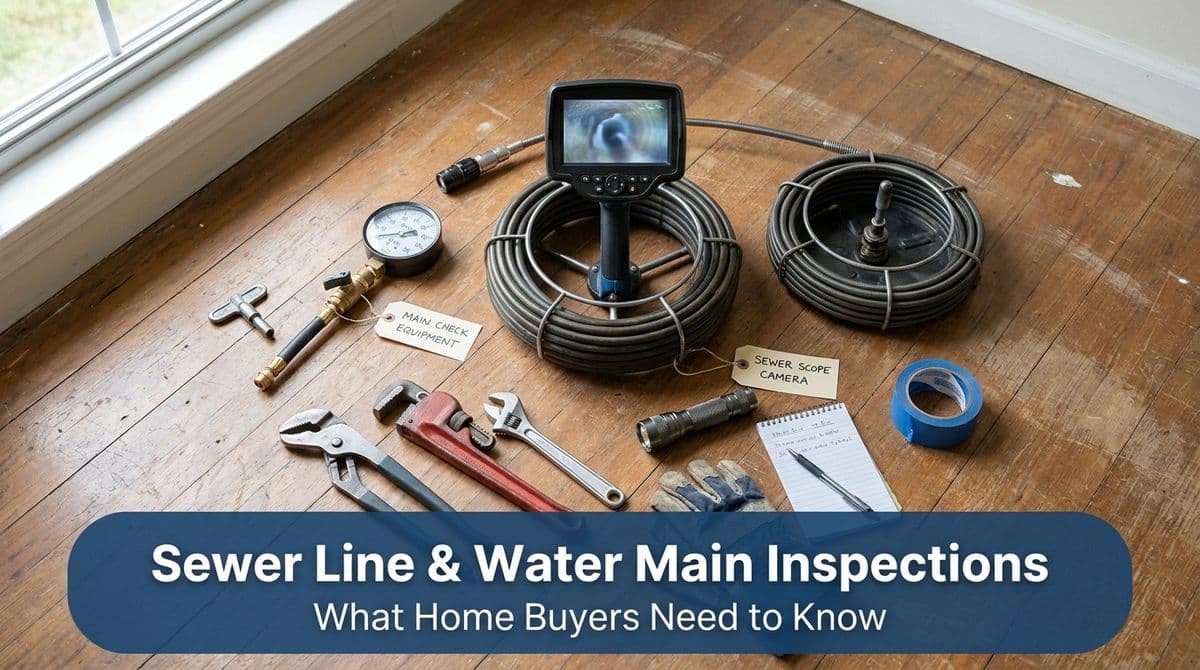
When Kelly asked about the sewer scope, that part was straightforward for us. A sewer line scope is a camera inspection of the main drain line that runs from the home out to the city or district connection.
Here’s what we do on a typical scope for a home purchase:
- Find an access point – usually a cleanout near the house, in the basement, or sometimes a vent stack on the roof.
- Run a specialized camera – we feed a high-resolution camera through the line from the house to the main connection.
- Record and document – we capture video and note any defects, then provide a written report you can use in your negotiations.
We’re looking for things like:
- Root intrusion from nearby trees
- Sags or “bellies” in the pipe where waste and water can collect
- Cracks, breaks, or offsets between pipe sections
- Old materials like clay or Orangeburg that may be at the end of their life
Any one of these can turn into a four- or five-figure repair later. That’s why, when we’re advising buyers, we almost always recommend a sewer scope on older homes or properties with big trees, even if everything seems to be “flushing fine” during the basic home inspection.
“Water Main Inspection” – What Buyers Usually Mean
With Kelly, the “water main inspection” part was less clear — and that’s common. Buyers are often told, “Get the water main checked,” but nobody explains what exactly that should include.
When we hear that request, a couple of possibilities go through our minds:
- Condition and material of the water service line from the street to the house
- Leak checks on the main line and shutoff
- Backflow testing (often a separate, specialized service)
In Kelly’s case, we asked a key question: “Do you know what they actually want us to do on the water side?” She didn’t have details, which is totally normal when a coordinator is just stacking appointments. So our next step was to look up the address, confirm the utility district, and see what’s required or recommended for that specific area.
Here’s what we typically offer for buyers when they say “water main inspection”:
- Visual and functional check of the water service entry, shutoff, and pressure-reducing valve (if present)
- Pressure testing at fixtures to spot signs of undersized or failing lines
- Leak indicators (for example, meter movement when everything in the home is shut off)
If a true backflow test is needed by the district, we’ll let you know right away if that’s something we can perform or if we should refer you to a certified backflow tester.
When Home Buyers Should Order These Inspections
During our call with Kelly, she was juggling radon testing, a general home inspection, and our scope — all inside a tight inspection period. We see this all the time, so we’ve learned what timing works best.
In most purchases, we recommend:
- Order the sewer scope as early as possible in your inspection window, ideally alongside the main home inspection.
- Loop us in on your deadlines (for example, “our contingency ends on the 15th”) so we can prioritize your report.
- Coordinate with any tests that require closed conditions (like radon), so we’re not opening doors or running a lot of water at the wrong time.
For Kelly’s buyers, the key was getting on the schedule early enough that we could complete the scope, coordinate with the district, and still leave them time to negotiate any needed repairs.
How We Coordinate With Local Districts
One thing Kelly didn’t realize — and many buyers don’t — is that in areas like Truckee, the sanitary or utility district often wants to be involved in the sewer inspection, especially for change-of-ownership situations.
Here’s how we typically coordinate everything on our side:
- Look up the address to confirm: sewer vs. septic, and which district or utility serves the property.
- Confirm district requirements – some want to be on-site, some just want our report, and some have specific forms or fees.
- Schedule a time that works for three parties: you (or your inspector), us, and the district representative.
- Perform the scope and document findings, including video, still images, and a written summary.
- Provide you and the district with what they need so the sale can move forward smoothly.
From your perspective as a buyer, you really only need to do two things: give us the correct address and share your key dates. We handle the calls and coordination with the district so you’re not stuck on hold trying to figure out who does what.
What You Can Expect From Our Reports
When we scoped Kelly’s buyer’s property, our goal was to give them clear, decision-ready information, not just technical jargon.
Our sewer and water line inspections for buyers typically include:
- A written summary in plain language: what’s good, what’s marginal, and what’s a concern.
- Video or photos of any defects in the sewer line.
- Recommendations with approximate repair or replacement implications (for budgeting and negotiations).
- Timing – we aim to deliver within your inspection window; often the same day or next business day.
In Kelly’s situation, the buyers wanted to know, “Will we have this in time to make a decision?” Our answer — and our standard practice — is to align our reporting with your contingency deadlines so you can act on what we find.
Thinking About an Offer? Here’s Our Advice
If you’re under contract or about to make an offer on a home in our area, here’s what we’d recommend based on what we walked through with Kelly:
- Plan on a sewer scope for most older homes or properties with mature trees.
- Clarify what you mean by “water main inspection” so we can tailor the service (line condition, pressure, backflow, or all of the above).
- Tell us your inspection deadline and other scheduled tests upfront.
- Let us coordinate with the local district so your inspection meets any sale or permit requirements.
If you’re not sure exactly what you need, that’s okay. Call us with the address and your timeline, and we’ll walk you through what’s required in your specific district and how to get it done before your contingency clock runs out.