Sewage Leaks in Crawl Spaces: Dangers & Next Steps
Sewage leak in your crawl space? Learn the real dangers, common causes, and the exact steps homeowners should take before, during, and after calling a pro.
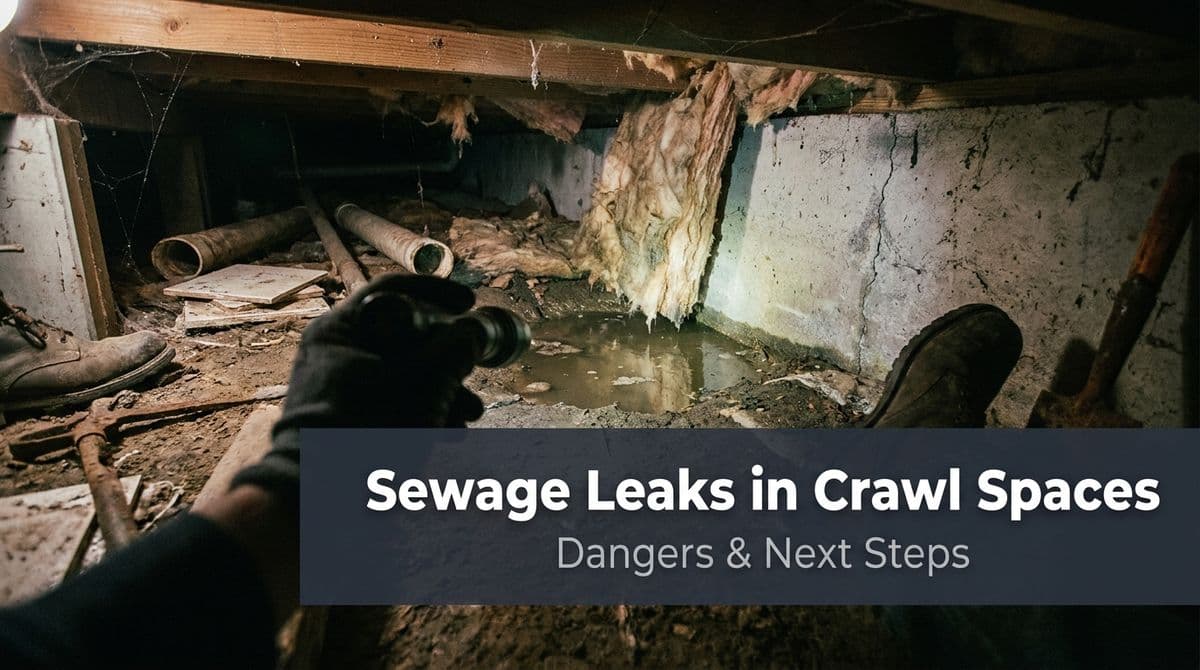
A Crawl Space Sewage Leak That Couldn't Wait
We recently got a call from a customer — let’s call her Laura — who sounded understandably anxious. She needed help with a sewage leak under a home, plus a pump inspection. The leak was showing up in the crawl space, and she had even set up a lockbox and detailed directions so our inspector could get underneath the house.
On top of that, Laura knew the property was on septic, but the septic tank lids weren’t exposed and she wasn’t sure where they were located. She just knew something was wrong and wanted it handled “as soon as possible.”
If you’re dealing with a similar situation — sewage in your crawl space, a strong odor, or unexplained dampness under the house — you’re right to treat it as urgent. Crawl space sewage leaks can cause serious health risks and structural damage if they aren’t addressed quickly.
Why Sewage Leaks in Crawl Spaces Are So Dangerous
A lot of homeowners think, “Well, it’s just under the house — I don’t go down there anyway.” The problem is that whatever happens in your crawl space rarely stays in your crawl space.
Here are the biggest dangers we explain on calls like Laura’s:
- Health risks from bacteria and viruses – Sewage carries harmful pathogens (like E. coli and other bacteria) that can become airborne as moisture evaporates and can travel into your living space.
- Mold and mildew growth – A damp, contaminated crawl space is perfect for mold. That can trigger allergies, asthma, and persistent musty odors inside the home.
- Wood rot and structural damage – Long-term moisture and sewage exposure can rot floor joists, beams, and subflooring, leading to sagging floors and expensive structural repairs.
- Attraction for pests – Standing sewage and constant moisture can attract insects and rodents, which bring their own health and damage issues.
- Air quality issues – Most homes pull a surprising amount of their indoor air from the crawl space. If that air is contaminated, you’ll be breathing it.
This is why, when someone like Laura calls with sewage in the crawl space, we treat it as an urgent situation — not just an inconvenience.
Common Causes of Sewage Leaks Under a House
Once we’re on-site, our first job is to figure out where the leak is coming from. In Laura’s case, it was tied to a septic system and pump that needed inspecting, but there are several common culprits we look for:
- Damaged or broken sewer lines – The main drain line running under the house can crack or separate due to age, shifting soil, or poor installation, allowing wastewater to drip or pour into the crawl space.
- Loose or failed pipe connections – Fittings can loosen over time, especially at joints where different materials meet or where the line changes direction.
- Septic system backups – If you’re on septic and the tank is full, failing, or the lids and access points are compromised, wastewater can back up into the house or leak into the crawl space.
- Failed sewage or lift pump – Homes with basements or lower-level plumbing (like Laura’s situation with a pump inspection) often rely on a pump to move sewage uphill. If that pump fails or a control float sticks, sewage can overflow in hidden areas.
- Improperly sloped or unsupported piping – If the line sags, it can create “bellies” that trap waste, eventually leading to clogs and leaks at weak points.
Knowing you’re on a septic system, like Laura was, is a big clue for us. If the septic lids aren’t exposed or accessible, that’s usually one of the first things we address so we can properly inspect and pump the system.
What Homeowners Should Do First (Before We Arrive)
If you suspect a sewage leak in your crawl space, here’s what we recommend doing right away, even before a technician gets there:
- Limit water use – The more water you send down the drains and toilets, the more you may be feeding the leak. Take short showers, avoid laundry and dishwashers, and flush only when necessary.
- Keep people and pets away from the area – Don’t send anyone into the crawl space unless they’re properly equipped. Sewage is not something to “just take a quick look at” in shorts and sneakers.
- Ventilate if it’s safe – If you can safely open crawl space vents or an access hatch without climbing in, a bit of ventilation can help reduce odors. Don’t set up fans that might blow contaminated air into the home.
- Note any access details – Just like Laura did with her lockbox and directions, think about how we’ll get under the house. Clear the area around the crawl space access, remove stored items blocking doors or hatches, and have any gate or door codes ready.
- Avoid DIY cleanup of raw sewage – Without proper protective gear and disposal methods, you can make the situation more dangerous for yourself and others.
How We Diagnose and Fix Crawl Space Sewage Leaks
When we arrive at a home like Laura’s, we follow a step-by-step approach:
- Safety assessment – We start by evaluating the level of contamination, checking for standing sewage, strong gases, or electrical hazards before anyone goes under the house.
- Locate the source of the leak – We inspect visible drain lines, connections, and any pumps or fittings in the crawl space. If you’re on septic, we may also need to locate and expose the septic lids for a full inspection and possible pumping.
- Stop the active leak – That may mean repairing or replacing a damaged section of pipe, securing loose fittings, or addressing pump failures and control issues.
- Recommend cleanup and remediation – Plumbing repairs stop the problem from getting worse, but you’ll still need proper cleanup of contaminated soil, vapor barriers, and structural materials. We’ll explain what kind of remediation is needed and whether a specialized cleanup or restoration company should be involved.
- Check for related issues – We look for signs of long-term moisture, mold, or structural concern and advise you on any next steps.
How to Prevent Future Sewage Leaks in Your Crawl Space
Once the immediate crisis is handled, most homeowners ask us, “How do I make sure this doesn’t happen again?” Here are some of the preventative steps we often recommend:
- Regular septic pumping and inspection – If you’re on septic, don’t wait for a problem. Pumping every 3–5 years (or as recommended for your household size) and routine inspections can catch issues early.
- Know where your septic lids and lines are – Having the lids properly exposed and mapped makes future service faster, cheaper, and less disruptive.
- Avoid flushing anything but toilet paper – Wipes (even “flushable” ones), hygiene products, and grease can clog lines and contribute to leaks.
- Schedule periodic drain and sewer line checks – For older homes or homes with trees nearby, a camera inspection of the main line can reveal cracks, roots, and dips before they turn into sewage in your crawl space.
- Install or maintain a properly sized sewage pump – If your home relies on a pump, make sure it’s correctly sized, has a backup plan (like an alarm), and gets routine checks.
When in Doubt, Call a Pro Quickly
If you smell sewage, see wet spots near your crawl space, or have any reason to suspect a leak under your home, don’t ignore it. Like Laura, it’s better to call as soon as possible and let us walk you through what to do next.
A quick response can be the difference between a localized repair and a major structural and health issue. If you’re worried about a sewage leak in your crawl space or need a pump or septic inspection, reach out — we’re happy to take a look, explain what’s going on in plain language, and help you get your home back to healthy and safe.