Septic Tank T-Outlets & Baffles: When to Replace Them
Wondering what a septic tank T-outlet or baffle does and why it matters? Learn how these small parts protect your drainfield and when they need to be replaced.
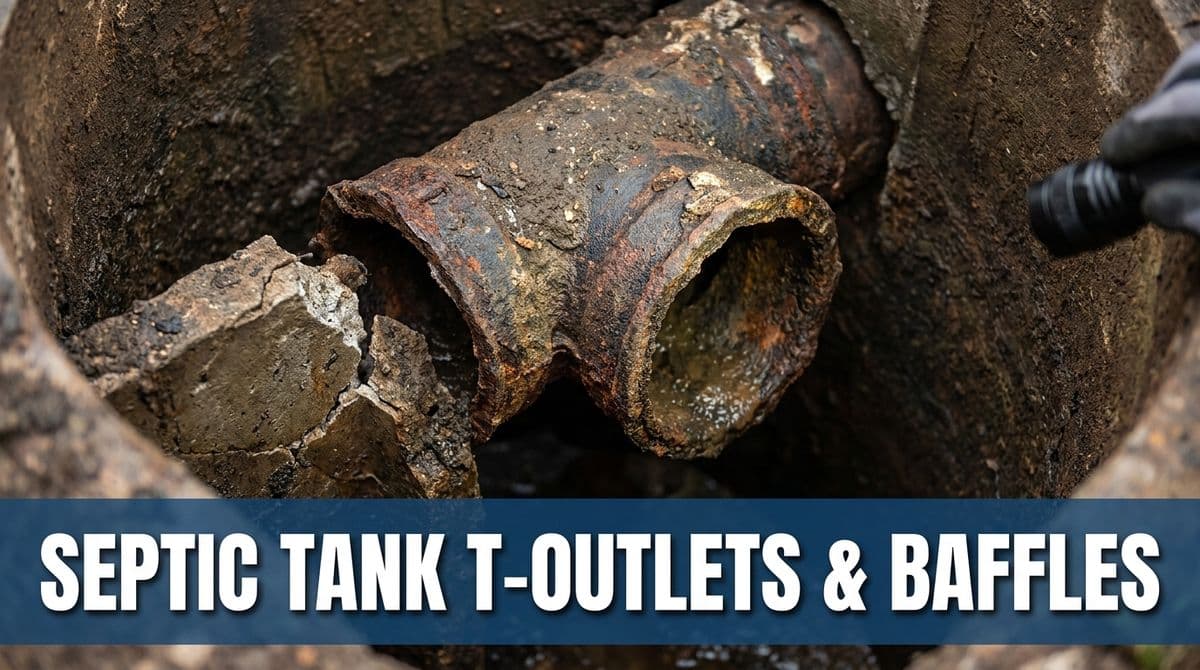
Septic Tank T-Outlets and Baffles: What We Explained to a Worried Landlord
We recently got a call from a customer — let’s call her Sarah — who had just had her septic tank pumped at a rental property. The pumper told her the “baffle collar thingy” was falling apart and that she needed a new T installed. By the time she called us, she was worried about two things: the safety of her new tenant and whether the system might back up if that part wasn’t fixed right away.
That call turned into a great conversation about what septic T-outlets and baffles actually do, why they fail, and how to know when it’s time to replace them. If you’ve ever been told you need a new T or baffle and weren’t quite sure what that meant, this is for you.
What Is a Septic Tank T-Outlet or Baffle?
When we got out to Sarah’s place, the first thing we did was open the tank and show her what we were talking about. At the outlet side of a septic tank, you’ll usually see one of two things:
- An older-style concrete baffle built into the tank wall
- A newer plastic or PVC T-outlet that sticks down into the liquid
Both serve the same purpose: they keep the scum layer (grease and floating solids) and the sludge layer (heavy solids at the bottom) from flowing out of the tank and into your drainfield. Only the relatively clear, middle “effluent” layer is supposed to leave the tank.
Without a working outlet baffle or T, every flush can send fats, solids, and toilet paper straight toward the drainfield — and that’s how expensive drainfield failures start.
What Exactly Does the T or Baffle Do?
On the call, Sarah described it as “that T thing” and “the baffle collar,” and that’s actually a good way to picture it. Here’s what that piece does for you:
- Skims off the right layer. The outlet T draws water from below the floating scum layer but above the sludge, sending only the middle liquid out.
- Prevents floating solids from escaping. Grease, oils, and toilet paper tend to float at the top. The vertical part of the T blocks them.
- Reduces turbulence. When water enters and leaves the tank, the baffles help reduce splashing and mixing, which lets solids settle like they’re supposed to.
- Protects the drainfield. By keeping solids inside the tank, the T-outlet is one of your drainfield’s best friends.
We told Sarah that for the cost of installing a new outlet T, she was essentially buying insurance for her drainfield. Replacing a T is quick and relatively inexpensive; replacing a failed drainfield is not.
Why Do Septic Baffles and T-Outlets Fail?
Sarah’s main question was, “If it’s broken, how did that happen?” There are a few common reasons we see:
1. Age and Material
Older tanks often have concrete baffles cast into the tank wall. Over time they can:
- Crack or crumble from age
- Be eaten away by sewer gases
- Break off during pumping if they’re already weak
Modern systems usually have PVC or plastic Ts. These can also be damaged if someone uses the T as a step or leans heavy equipment on it when the lid is open.
2. Corrosion and Gas Damage
Septic tanks are harsh environments. Hydrogen sulfide and other gases attack concrete and metal over the years. If your tank is a few decades old, it’s not uncommon for the original baffles to be deteriorated or completely gone.
3. Improper Pumping or Access
Sometimes, when tanks are pumped through small holes or with tight access, equipment can strike the baffle. That’s why we’re always careful when opening lids and lowering hoses. If the baffle was already weak, a little bump can finish it off.
Signs Your Septic Baffle or T Might Need Replacement
In Sarah’s case, the pumper had already told her the baffle was “falling apart,” so we knew we’d be installing a new outlet T. But how do you know there’s a problem before it gets that far?
Here are a few red flags we look for during an inspection:
- Missing or broken outlet assembly. When we open the tank, there should be a visible T or baffle at the outlet. If it’s gone, leaning, or crumbling, that’s a problem.
- Grease or toilet paper at the outlet. If we see scum or solids trying to exit the tank, the outlet baffle isn’t doing its job.
- Evidence of past backups. Repeated backups or drainfield issues on a system that’s otherwise pumped regularly often point to a failed outlet baffle letting solids escape.
As a homeowner, you probably won’t see these issues yourself, since you’re not usually opening the tank. But you can ask your pumper or septic pro specific questions:
- “Are my inlet and outlet baffles or Ts intact?”
- “Do you recommend replacing the outlet with a modern T?”
- “Did you see any solids trying to get into the outlet pipe?”
When Is It Time to Replace a Septic T or Baffle?
Sarah wanted to know if this was something that could wait, especially with a new tenant moving in. Our answer was the same we give most customers:
- If the outlet baffle or T is missing, broken, or badly deteriorated, it should be replaced as soon as possible.
- If it’s just older concrete but still intact, we may recommend a proactive upgrade to a PVC T, especially if the tank is aging.
- If you’re already having backups or drainfield issues, an outlet inspection and possible T replacement is part of the troubleshooting process.
We also talked through safety with Sarah. Until we came out, she needed the tank access secure because the lid had been disturbed and there was a concern about people walking near it. Any time a lid is open or not properly seated, that’s a serious safety hazard, especially with children or pets around. Always make sure lids are solid and locked down, and if something seems off, call your septic pro right away.
What We Did for Sarah — And What We’d Do for You
We scheduled Sarah for an early-morning visit, pulled the lid, confirmed the outlet baffle was shot, and installed a new PVC T-outlet assembly. We made sure the access was safe and secure before we left, and we walked her through what we’d done and why it mattered, especially with a tenant moving in.
If you’ve been told your septic “T” or baffle is bad — or you’re not sure anyone’s checked it in years — it’s worth having it inspected. A simple T or baffle replacement now can add years to your drainfield’s life and help you avoid costly repairs down the road.
And if you ever hear someone on your property talking about a “baffle collar thingy,” you’ll know exactly what they mean.