Preventative Septic Sewer Line Care: Jetting vs. Cleaning
On a septic system and thinking about sewer line maintenance? Learn how often to clean, jetting vs. mechanical tools, and what’s safe for PVC, cast iron, and Orangeburg.
A homeowner’s question about “cleaning the pipe to the septic”
We recently got a call from a homeowner — let’s call him Tom — who lives on a septic system and likes to stay ahead of problems. We’re in this line of work every day, so calls like Tom’s are ones we get often, and they give us a chance to walk homeowners through their options in plain language.
Tom told us he gets the sewer line between his house and septic tank cleaned every couple of years as preventative maintenance. He wasn’t having any backups or slow drains; he simply wanted to knock out any roots, clear out buildup, and keep things flowing. The twist? Parts of his line were older materials — PVC in some spots, but also cast iron and even some suspected Orangeburg pipe.
On that call, we explained that our high-pressure jetter truck was temporarily down for repairs, but we could still offer mechanical cleaning with a high-powered drain tool. That led to a great conversation about what’s safe (and what isn’t) for different pipe materials, when jetting makes sense, and how often homeowners on septic should clean their lines in the first place.
Based on what we walked through with Tom, here’s how we look at preventative sewer line maintenance on septic systems — and how we help homeowners choose between jetting and mechanical cleaning for PVC, cast iron, and Orangeburg pipes.
Jetting vs. mechanical cleaning: what’s the difference?
When Tom called, he mentioned that the last company “ran a blade down there and water,” and he wasn’t sure exactly what was what. That’s a common point of confusion, so we broke it down for him the same way we’ll break it down here.
Hydro jetting (high-pressure water)
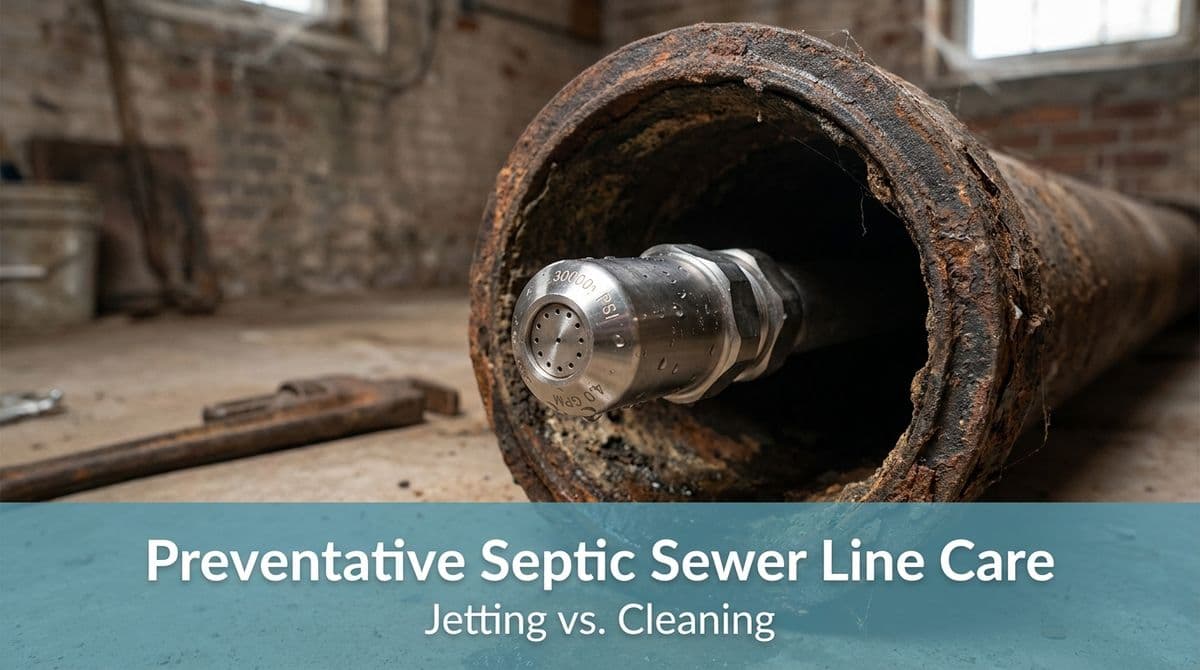
Hydro jetting uses a specialized hose and nozzle to blast high-pressure water through your sewer line. The nozzle shoots water backward to propel itself and forward to cut through soft blockages and many roots.
Pros:
- Excellent at scouring grease, sludge, and soft buildup off pipe walls
- Can flush loose roots and debris all the way into the septic tank
- No blades or chains physically scraping the pipe
Cons:
- Pressure has to be controlled for older or fragile pipes
- May not fully remove thick, woody root intrusions without help
- Requires a jetter truck or specialized jetting unit
Mechanical drain cleaning (cables, blades, and chains)
Because our jetter was down when Tom called, we talked about using a mechanical drain cleaning tool instead — in our case, a high-powered cable machine with a chain or bladed head.
Pros:
- Very effective at cutting and tearing through intrusive roots
- Can scrape scale and hard deposits from cast iron
- Doesn’t require a jetter truck, so it’s often more readily available
Cons:
- Physical contact with the pipe walls — not ideal for fragile materials
- Can damage softer or deteriorated pipe if used aggressively
- Cut roots can be left in the line if not flushed thoroughly
With Tom, our honest answer was: we’d want to see the inside of the pipe with a camera before committing to a mechanical method, especially given the Orangeburg sections.
How often should you clean a sewer line to a septic tank?
Tom had been on a “every couple of years” schedule with the previous company, and he asked us if that was still a good idea. Our answer depends on what we find, but here are the general guidelines we shared with him.
Typical preventative cleaning intervals
- Low-risk lines (PVC, good slope, no large trees nearby): Often every 3–5 years, sometimes longer if a camera inspection shows a clean, healthy pipe.
- Moderate risk (older cast iron, some trees, past minor root issues): Every 2–3 years is a reasonable preventative schedule.
- High risk (Orangeburg, heavy roots, known defects): We usually recommend annual inspections and only cleaning as gently and as rarely as needed until a long-term repair or replacement can be planned.
For homeowners on septic, we also remind folks that anything we knock loose — roots, sludge, grease — ends up in the septic tank. After a heavy cleaning, it may be wise to:
- Schedule a septic pumping sooner, or
- At least plan to check tank levels and solids if you’re due soon anyway.
What’s safe for PVC, cast iron, and Orangeburg?
The part of Tom’s call that made us pause was when he said some of his line might be Orangeburg. That, plus plastic sections, made tool choice really important. Here’s how we generally approach each pipe material.
PVC sewer lines
PVC is a durable plastic, but it’s not indestructible. Our approach:
- Hydro jetting: Usually safe when pressures are kept within a reasonable range and the line is structurally sound.
- Mechanical cleaning: We’re cautious with aggressive chain or carbide tips. Light mechanical heads may be okay, but we don’t want to gouge or crack fittings.
- Best practice: Start with a camera inspection. If the PVC looks good, a controlled jetting is often the gentlest way to clean.
Cast iron sewer lines
Cast iron is tough but can develop heavy scale and internal rust. For these:
- Mechanical cleaning: Very effective at removing scale and cutting roots when the pipe still has good wall thickness.
- Hydro jetting: Also effective, especially for flushing out debris after mechanical descaling.
- Caution: Severely corroded or thin-walled cast iron can be damaged by both tools and high-pressure water, so we always inspect first.
Orangeburg sewer lines
Orangeburg is a paper-based pipe from the mid-1900s that was impregnated with tar. By now, most of it is at or beyond its expected lifespan.
- Risk: It’s soft and prone to blistering, deforming, and collapsing. Aggressive mechanical cleaning can easily chew it up.
- Hydro jetting: Must be done at very controlled, reduced pressures, if at all. Even then, we’re cautious.
- Our approach: Use the least aggressive methods possible, guided by a camera, and talk frankly about planning for repair or replacement. With Tom, this is why we hesitated to send a high-speed chain tool into sections that might be Orangeburg.
Why a camera inspection should come first
On Tom’s call, before we promised any specific cleaning method, we made it clear we’d want to run a camera from the cleanout to the septic tank. That might feel like an extra step, but it protects both your pipes and your wallet.
With a camera, we can:
- Confirm pipe material (PVC, cast iron, Orangeburg, or a mix)
- See exactly where roots are entering and how severe they are
- Check for sags, breaks, offsets, or partial collapses
- Decide whether jetting, mechanical cleaning, or a combination is safest
Sometimes we find the line is in such rough shape that “just cleaning it” isn’t the best idea. In those cases, we’d rather help you plan a repair or replacement than risk a collapse during aggressive cleaning.
Practical tips to extend time between cleanings
If you’re like Tom and want to keep your septic line healthy, here are a few habits that make a big difference:
- Watch what goes down the drain: No wipes (even “flushable”), feminine products, paper towels, or dental floss.
- Limit grease: Wipe greasy pans with a paper towel before washing; never pour cooking oil down the drain.
- Protect the line from roots: Avoid planting trees and large shrubs directly over or near your sewer route.
- Use water wisely: Spread out laundry and heavy water use so you’re not overloading the line and septic in short bursts.
Not sure what your pipe is made of? Start with a conversation.
If you’re on a septic system and wondering whether you should jet your line, mechanically clean it, or leave it alone for now, you’re not alone — Tom had the same questions. The safest path is usually:
- Talk through your home’s age, tree situation, and any past issues.
- Schedule a camera inspection from the cleanout to the tank.
- Pick the gentlest effective cleaning method for your specific pipe material.
We handle conversations like this every week. If you’d like us to take a look at your line, we’re happy to walk you through the options and find a preventative maintenance plan that keeps things flowing without putting your pipes at risk.