Septic Prep Before Installing Artificial Turf
Planning to install artificial turf over a septic system? Learn the key maintenance steps and mapping you should do first to avoid costly turf damage later.
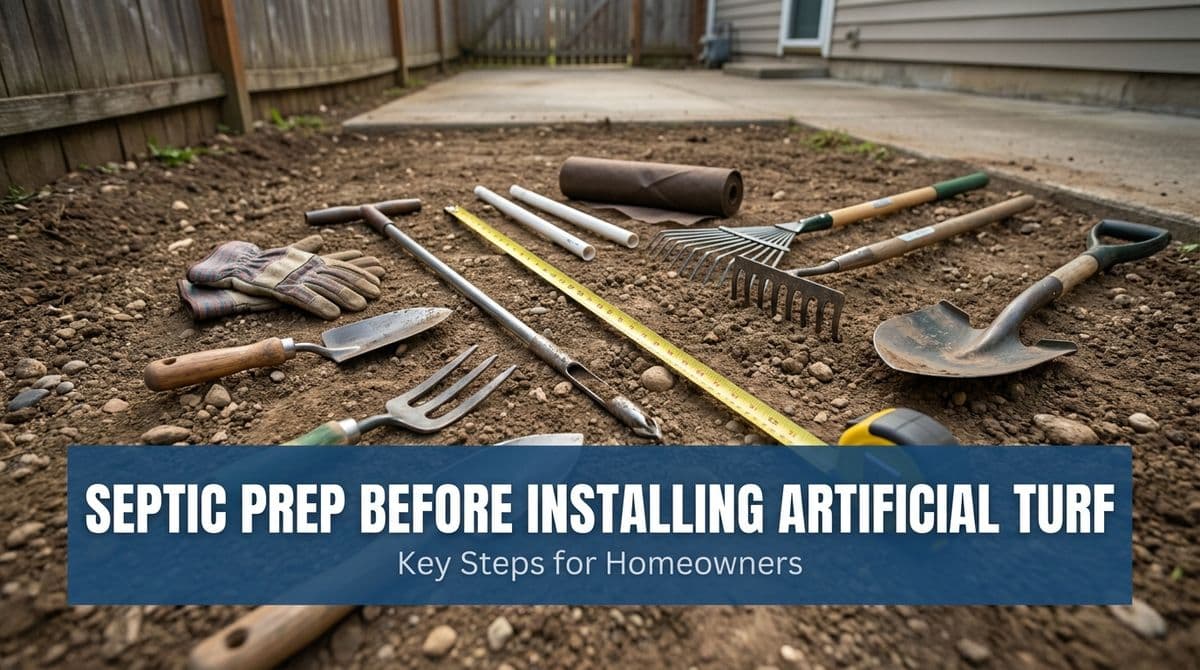
Getting Your Septic System Ready Before Artificial Turf
We recently got a call from a homeowner — let’s call him Ryan — who was in the middle of planning a big backyard upgrade. His yard was basically a dirt patch, and he was excited to finally install artificial turf so his kids could have a clean place to play.
There was just one catch: his septic tank and lids were right in the area where the turf was going. He told us he hadn’t had the tank serviced in over 10 years, everything seemed fine, but he wanted to “get it taken care of before I put the turf down.”
That’s exactly the kind of call we love to get, because it means a homeowner is thinking ahead instead of waiting for a messy surprise later.
Why Septic Maintenance Matters Before Turf
Once artificial turf is installed, your septic system becomes much harder (and more expensive) to access. With Ryan, the lids were fully exposed and easy to reach because the yard was just dirt. That made it the perfect time to:
- Pump and inspect the septic tank after 10+ years of no service
- Locate and clearly mark the lids before they’re covered with turf
- Check for any existing issues that could turn into a future dig-up job
If you skip this step and go straight to turf, any future septic repair or even routine pumping might mean cutting and pulling up sections of your brand-new lawn.
Step 1: Schedule a Full Pump and Inspection
When Ryan called, he mentioned everything in the house was working fine — no backups, no slow drains. That’s common. Most septic problems don’t show visible symptoms until they’re already serious. In his case, it had been over a decade since the last service, which is well past the usual recommendation of 3–5 years.
Before you install artificial turf, plan to:
- Pump the tank completely to remove solids and sludge
- Inspect the tank walls, baffles, and lids for cracks or damage
- Check the inlet and outlet for blockages or signs of backups
Doing this right before turf goes in gives you a “reset point” — you start with a clean, inspected system and a clear idea of when it will need to be serviced next.
Step 2: Locate and Mark All Septic Components
On our call, we talked with Ryan about another key step: marking exactly where those lids are located. At the time, they were wide open in a bare dirt yard, which made our job simple. After turf is installed, though, those access points can disappear visually.
Here’s what we recommend before turf installation:
- Have your septic company confirm all lid locations while everything is exposed.
- Measure and map lid locations from fixed points (house corners, fences, patios).
- Consider installing risers so lids are at or near the finished grade.
- Share the map with your turf installer so seams or removable panels can be planned around those spots.
Some homeowners even install small, discreet markers in the landscape (like decorative rocks or pavers) to show where lids are without making the yard look like a construction site.
Step 3: Coordinate With Your Turf Installer
After we arranged a time to come out, Ryan’s next concern was his kids: “As long as it’s not like a fume issue or anything like that.” We explained that while it doesn’t smell great during pumping, there’s no serious health issue as long as everyone stays clear of the work area.
The same kind of communication is important with your turf crew. Before they start:
- Let them know you have a septic system and where lines and lids are located.
- Ask them how they handle access panels for things like septic, irrigation valves, and cleanouts.
- Plan for removable turf sections or access hatches above your septic lids.
A good turf installer will work with you so that routine septic maintenance in 3–5 years doesn’t mean destroying part of your new yard.
Step 4: Plan for Future Service After Turf Is Installed
Once your artificial turf is in place and your tank is freshly serviced, you’re not done forever — you’ve just set yourself up for easier maintenance down the road.
Here are a few things to keep in mind going forward:
- Stick to a 3–5 year pumping schedule, depending on household size and usage.
- Keep your map and any photos of lid locations in a safe place.
- Tell future owners (if you sell the house) about the septic layout under the turf.
- Avoid heavy vehicles or structures on top of the tank and leach field, even if the turf looks solid.
This kind of planning costs very little compared to the expense and hassle of cutting up a brand-new artificial lawn to find a buried lid later.
Thinking About Turf Over a Septic System?
Ryan did the smart thing by calling us before the turf went down, when his septic lids were still exposed and easy to reach. We were able to service the tank, inspect everything, and document the layout so his new lawn project could move forward without surprises.
If you’re in the same situation — a bare backyard now, turf on the way, and a septic system somewhere under your feet — it’s the perfect time to get ahead of it. Pump it, inspect it, map it, and coordinate with your turf installer so your new low-maintenance yard doesn’t turn into a high-maintenance headache later.