Septic Lift Station Pipe Leaks: Signs, Safety & Excavation
Think you’ve got a septic lift station pipe leak? Learn how to spot the signs, what it really means, and when excavation is actually necessary.
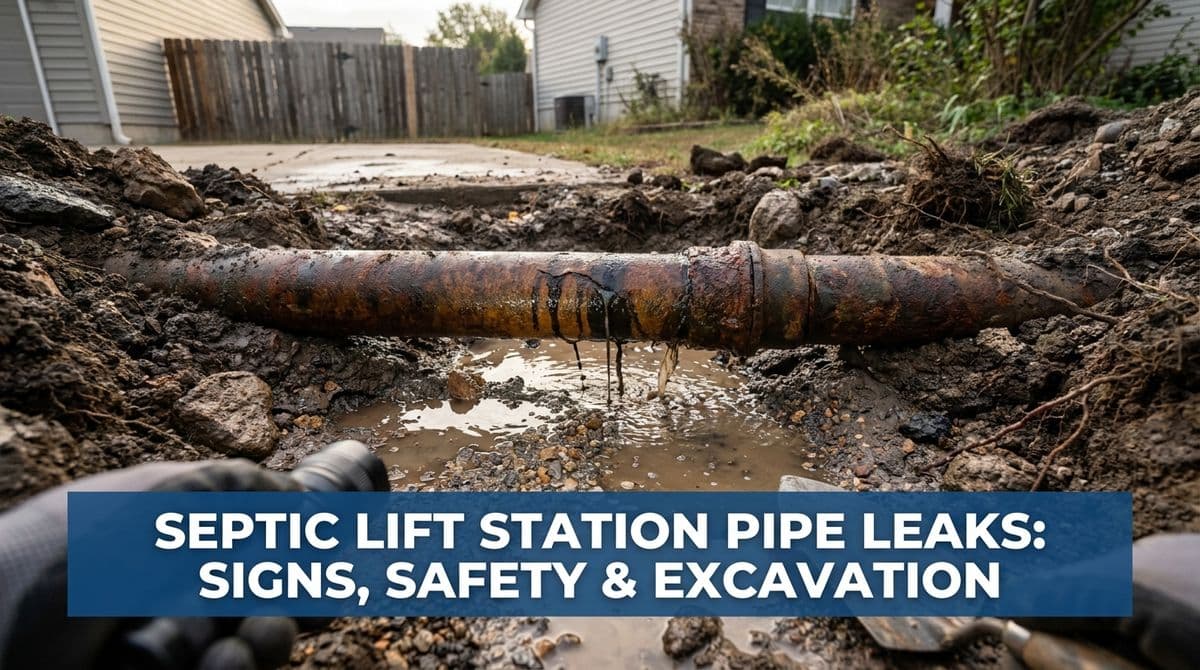
When a Septic Lift Station Pipe Starts Leaking
We recently got a call from a homeowner — we’ll call him Mike — who had just had his septic tank pumped. While the pumper was on site, they took a look at the lift station and noticed something worrying: it looked like a pipe inside the lift station might be leaking.
Mike told us the pumper had said, “You should get someone over here as soon as possible to check this out,” and mentioned it might need to be dug up and replaced. The line he was worried about was the pipe that carries wastewater from the lift station pump out to the leach field, and the station was buried around four feet deep.
There wasn’t a backup, the tank had just been pumped, and the leak didn’t look “terrible.” But whenever the pump cycled on, they thought they could see a little leak, and then it stopped when the pump shut off. That was enough for Mike to wonder: is this an emergency? Is excavation really necessary? Or is this just something to keep an eye on?
Quick Refresher: What a Septic Lift Station Actually Does
Before we get too far, it helps to understand what’s going on inside that lift station. In most systems with a lift station, you’ll find:
- Underground tank or basin that collects wastewater coming from the home.
- Submersible pump that kicks on when the wastewater reaches a set level.
- Discharge pipe that carries pumped wastewater out to the septic tank or leach field.
- Check valve that keeps water from flowing back into the lift station after the pump shuts off.
When the pump runs, the discharge line is under pressure. If there’s a crack, loose fitting, or corroded joint, that’s when you’ll see (or hear) a leak — and that’s exactly what Mike was noticing.
How to Spot a Lift Station Pipe Leak
Mike’s situation is actually pretty common. Here are signs we tell homeowners to watch for around a lift station:
- Intermittent leaking inside the station that lines up with the pump cycle (it drips or sprays only when the pump runs).
- Wet, soggy soil right around the lift station lid, even when it hasn’t rained.
- Unusual smells of sewage around the station or nearby yard areas.
- Short-cycling pump (turning on and off more frequently than normal).
- Air bubbles or turbulence where the pipe meets the pump when it kicks on.
In Mike’s case, the leak stopped after the pump shut off, which told us the problem was likely on the pressurized discharge side, not wastewater flowing back into the tank. That detail matters when we’re deciding whether excavation is likely.
When Is a Leak an Emergency?
Not every lift station pipe leak means the system is about to fail today, but it does mean something is wearing out. Here’s how we think about urgency when we get a call like Mike’s:
Usually Not an Immediate “Middle of the Night” Emergency If:
- The tank was recently pumped and isn’t near capacity.
- There’s no sewage backup into the house (no gurgling drains, no toilets struggling, no basement floor drain issues).
- The leak is small and visible only when the pump runs, not a constant spray or gush.
But It Is Urgent and Needs Prompt Attention If:
- You see continuous leaking inside the lift station or around the outside of the tank.
- The pump runs longer than normal or never seems to shut off.
- There are signs of backup in the home or slow drains all at once.
- The surrounding soil is strongly saturated and soft over a wide area.
For Mike, we treated it as a priority, but not a 24/7 emergency. We scheduled a site visit, explained that we might need to excavate depending on what we found, and made a note about his skittish dog so we could give a heads-up before arriving.
When Is Excavation Actually Necessary?
Homeowners often assume “leak” automatically means “dig up the whole yard.” We always try to start with a careful inspection and only dig if we have to. Here’s how we approach it:
- Visual inspection inside the station: We’ll remove the lid, check the pump, discharge pipe, and fittings for obvious cracks, loose unions, or rusted components.
- Run test: We’ll run the pump while watching (and listening) for drips, sprays, or movement at joints.
- Check valve and fittings: Sometimes the culprit is a failing check valve or a compromised fitting right at the station, which may be fixable without a big dig.
Excavation becomes likely when:
- The leak appears to be on the buried section of pipe between the station and the septic tank or leach field.
- The pipe is cracked, crushed, or sagging from soil movement, tree roots, or age.
- There’s evidence of chronic saturation in the yard that lines up with the pipe route.
At depths around four feet or more like Mike’s, excavation is not a DIY job — it requires proper shoring, equipment, and safety practices. Our goal is always to pinpoint the problem and limit the dig to the smallest, safest area possible.
Safety Precautions for Homeowners Around Lift Stations
We completely understand wanting to take a look yourself, especially if you can see the leak. But we always recommend some basic safety rules:
- Never climb into or lean down inside the lift station. Harmful gases and low oxygen levels can be present.
- Use caution with lids. They can be heavy and sometimes slippery; always set them down securely away from children and pets.
- Keep kids and pets away from an open station or any excavation area.
- Do not reach into the water around pump wiring, floats, or electrical components.
- Do not attempt your own deep excavation around a lift station. Collapsed trenches are a serious risk.
It’s perfectly fine to observe from above, snap a photo or video of what you’re seeing, and share that with us — that often helps us diagnose faster.
What to Have Ready Before You Call Us
When Mike called, he did a great job providing details that helped us prioritize and plan. If you suspect a lift station leak, here’s the information that’s helpful to have on hand:
- Recent service history: Has the tank been pumped recently? Any prior repairs or issues?
- Depth estimate: Even a rough guess (3 feet? 4+ feet?) helps us prepare the right equipment.
- What you’re seeing and when: Does the leak happen only when the pump runs? Is the yard soggy?
- Any odors or backups in the house: Toilets, tubs, floor drains, or downstairs fixtures acting up.
- Site access details: Gates, pets, tight driveways, or landscaping we should know about.
The more we know up front, the better we can estimate whether a simple repair is likely or if excavation might be necessary.
How Regular Maintenance Helps Prevent Leaks
While not every leak can be prevented, we see far fewer major problems with lift stations that get regular care. We generally recommend:
- Routine septic pumping on the schedule appropriate for your tank size and household usage.
- Periodic lift station inspections to check pump performance, floats, and visible piping.
- Replacing aging components (like check valves and exposed fittings) before they fail completely.
- Watching for early warning signs like small wet spots, minor odors, or unusual pump cycling.
Catching a minor leak or weak fitting early can mean a small, targeted repair instead of a large, expensive excavation later on.
Wondering If Your Lift Station Leak Needs to Be Dug Up?
If you’re in a situation like Mike — you can see or suspect a leak, but you’re not sure how serious it is — we’re happy to come out, take a look, and explain your options. We’ll walk you through what we see, whether excavation is truly necessary, and what can be done to keep your system running safely and reliably.
You don’t have to guess what’s happening underground. We deal with these systems every day, and we’re here to help you make a clear, informed decision about your septic lift station.