Homeowner’s Guide to Septic Junction Boxes & Repairs
Wondering what a septic junction box does and why yours is exposed? We explain how it works, common problems, and what to expect during inspection and repair.
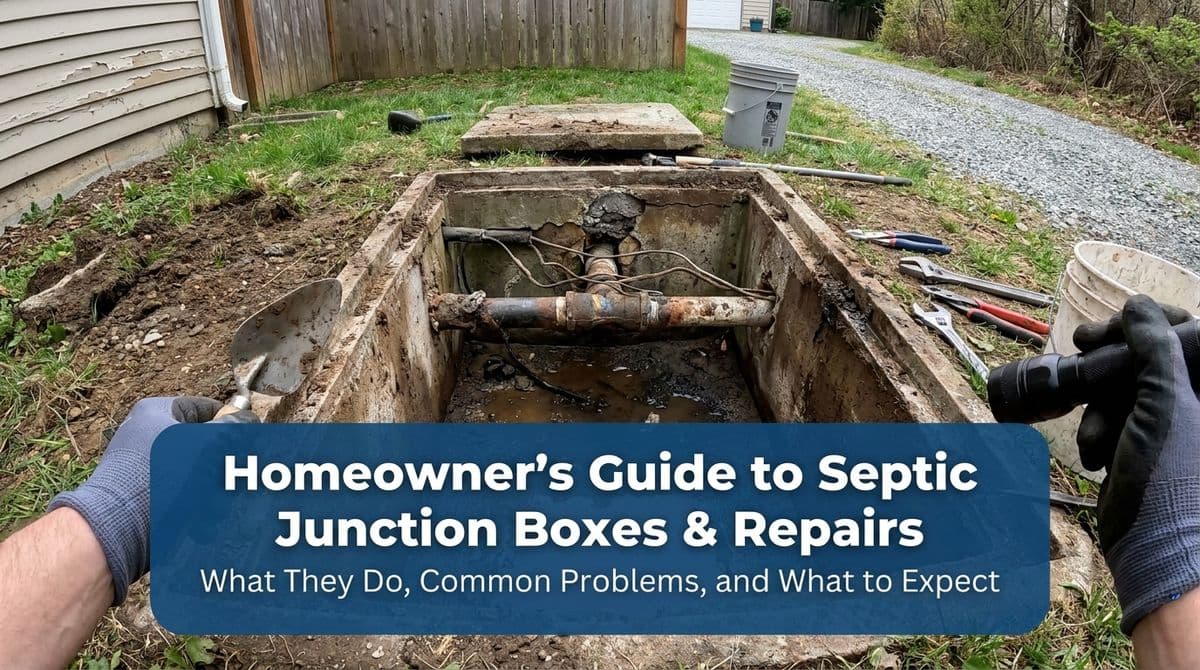
Homeowner’s Guide to Septic Junction Boxes
We recently got a call from a customer — let’s call her Carol — who had just come home from a long trip. She pulled into the driveway around midnight, walked around the side yard, and saw her septic area still dug up and the junction box exposed. Naturally, she was worried.
Carol told us the septic tank had been backing up on and off for a couple of months, and we had already been out several times to pump it. On the last visit, we dug down and uncovered the junction box, and while she was away, she wasn’t sure what had been done or what the plan was to fix things for good.
That kind of confusion is really common. Septic tanks get talked about a lot, but the junction box is one of those hidden parts that most homeowners never hear about until there’s a problem. So we thought we’d walk through what we explained to Carol: what a septic junction box does, the most common issues we see, and what you can expect during repairs.
What Exactly Is a Septic Junction Box?
The junction box (sometimes called a distribution box or “D-box”) is a small concrete or plastic box that sits between your septic tank and your drainfield or leach lines. Wastewater flows out of the tank and into this box, and from there it gets split into multiple lines that carry water out into the drainfield.
In simple terms, the junction box is the traffic cop of your septic system. Its job is to:
- Evenly distribute wastewater to each drain line
- Keep the system balanced so no one line gets overloaded
- Provide access so we can inspect, adjust, or repair the flow to each line
When the junction box is level and working properly, each line gets roughly the same amount of water, which helps your drainfield last longer and work more efficiently.
Common Problems We See With Junction Boxes
In Carol’s case, we suspected the junction box because the tank kept needing to be pumped and things were slowing down in the house. Here are the most common issues we find when we dig down to the box:
- Settling or sinking: Over time, the soil can shift and the box can tilt. When that happens, one outlet might be lower than the others, so most of the wastewater ends up in a single line. That line can clog or fail while the others are barely used.
- Clogs at the outlets: Grease, wipes, or heavy solids can build up right where the pipes leave the box, causing backups in the house or at the tank.
- Root intrusion: Tree roots love moisture. They can sneak into cracks and joints around the junction box and block flow to one or more lines.
- Corrosion or deterioration: Older concrete boxes can crumble or crack, and older metal components (like adjustment devices) can rust out, making it impossible to control the flow correctly.
Any of these problems can lead to recurring backups, standing water in the yard, or the need to pump the tank more often than normal — all things Carol was starting to see.
What You Can Expect During a Junction Box Inspection
When we get a call like Carol’s, we follow a fairly standard process. Knowing this ahead of time can make the whole experience a lot less stressful.
1. Locating and exposing the box
We start by confirming the layout of your system and locating the junction box. That usually means some digging in the yard. We try to keep the excavation as small and tidy as possible, but you’ll see an open pit while we’re working, just like Carol did when she got home.
2. Inspecting for level, damage, and flow
Once the box is exposed, we check:
- Whether the box is level
- The condition of the box walls and lid
- How wastewater is actually flowing out to each line (sometimes we run water or dye to see the distribution)
This tells us whether we’re dealing with a simple leveling or cleaning issue, or something more serious.
Typical Junction Box Repairs and How We Fix Them
After we’ve inspected the box, we walk homeowners through options. Here are the most common repairs and what they involve.
Leveling and rebalancing flow
If the box has settled but is otherwise in decent shape, we can often:
- Gently lift and re-level the box
- Adjust outlet devices or weirs (if present) to even out the flow
- Backfill around the box with suitable material to help prevent future settling
Clearing clogs and roots
If we find buildup or roots, we may:
- Clean out the outlets with specialized tools
- Carefully remove roots and seal small intrusion points
- Recommend removing problem trees or installing barriers if roots are severe
Replacing a failed junction box
When a box is too damaged to repair, we talk about replacement. That usually involves:
- Removing the old box and installing a new concrete or plastic box
- Reconnecting and properly supporting the inlet and outlet pipes
- Leveling and testing flow to each line before backfilling
Throughout the process, we keep homeowners updated so there are no surprises — something we made sure to do with Carol once we spoke with her after she got home.
When a Junction Box Issue Signals Bigger Septic Trouble
One question we often get is, “If my junction box is bad, does that mean my whole system is failing?” Not always — but sometimes it can be a warning sign.
We pay attention when we see:
- Multiple lines saturated or full of water even when the box is level
- Chronic backups that return shortly after pumping or basic repairs
- Surface pooling or sewage odors over a wide area of the drainfield
Those can indicate that the drainfield itself is nearing the end of its life, not just the junction box. In those cases, we talk through long-term options such as adding new lines, resting part of the field, or planning for a future drainfield replacement.
Maintenance, Inspections, and Real Estate Sales
Most homeowners only think about their junction box when something goes wrong, but a little proactive attention can save a lot of money and stress.
We typically recommend:
- Regular septic pumping every 3–5 years for an average household (more often with heavier use)
- A full system checkup — including taking a look at the junction box — at least every other pumping
- Keeping records of repairs and photos of the box location for future reference
Junction boxes also come up a lot in real estate transactions. In many areas, a septic inspection is required before a home sale, and part of that inspection includes opening the junction box to verify that:
- It is accessible and structurally sound
- Flow is being evenly distributed to the drain lines
- There are no signs of failure or chronic overloading
Catching problems at this stage can help both buyer and seller avoid surprise expenses after closing — and gives everyone a clearer picture of the system’s remaining life.
When to Call for Help
If you’re seeing slow drains, gurgling, wet spots near your drainfield, or you keep needing emergency pump-outs like Carol did, it is worth having the junction box checked. It is a relatively small component, but it plays a big role in keeping your septic system healthy.
We always tell homeowners: don’t wait for sewage to back up in the tub or yard. A timely look at your junction box and drainfield layout can turn a chronic headache into a manageable repair — and help your system serve your home for many years to come.