How We Check a Seller-Disclosed Water Leak in the Garage
Buying a home with a seller-disclosed past water leak? Here’s how we inspect the garage and main line so you can close with confidence.
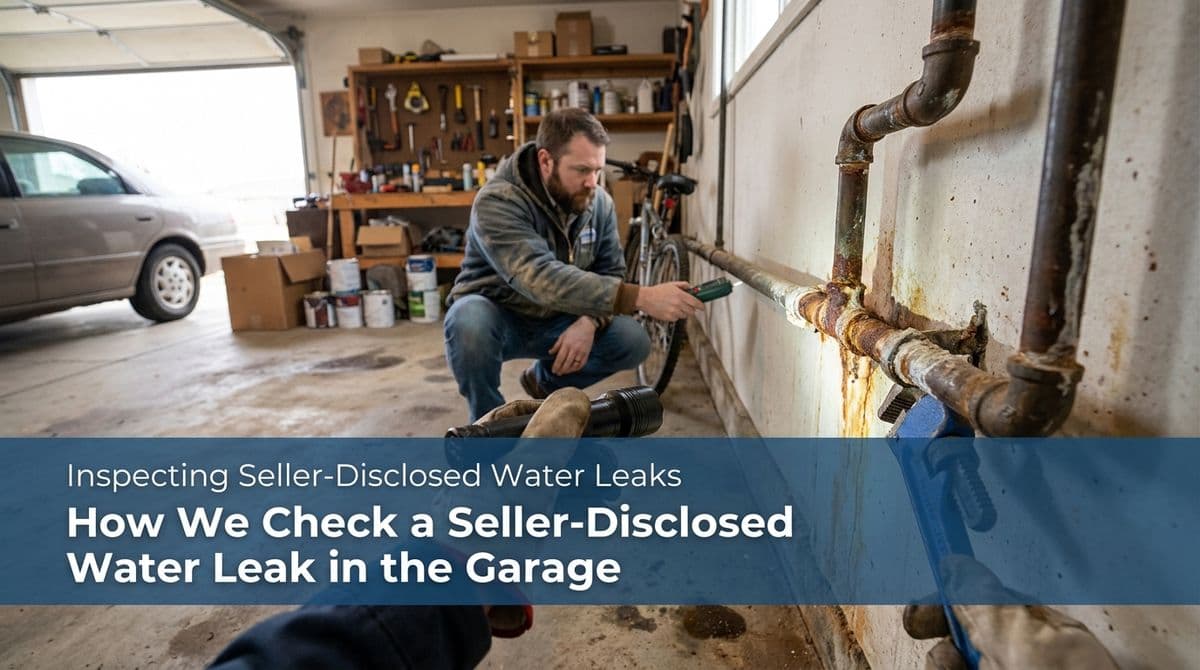
When a Seller Discloses a Past Water Leak
We recently got a call from a buyer’s agent — let’s call her Kelly — about a home her clients were under contract to buy. On the seller’s disclosure, there was a note about a recent leak in the main line in the garage, and Kelly wanted us to check it out before her buyers closed.
Situations like this come up a lot for us. A seller is honest about a past leak, the buyers get nervous, and everyone wants to know: Is this still a problem, and what should we be looking for? In this post, we’ll walk you through exactly how we handle these calls and what we recommend buyers check in the garage and main line before closing.
Start With the Disclosure and Access Details
On Kelly’s call, she hadn’t actually seen the written disclosure yet; she’d only heard verbally that there had been a main line leak in the garage. That’s common for us: we’re told “there was a leak,” but not where the pipe runs, whether it’s exposed, or if any repairs were made.
When you’re the buyer, we recommend you start by getting as much detail as you can from the paperwork and your agent:
- Where was the leak noted? (Garage, yard, under slab?)
- Was it described as “repaired,” “ongoing,” or just “noticed”?
- Are there any invoices or repair receipts from a plumber?
From our side, we also ask for basic access information: Is there a garage code? Is someone meeting us? Is the home vacant? On Kelly’s job, no one was living there, and there was going to be a lockbox, so we knew we’d have access to the garage and meter — both are key for our inspection.
Why the Garage & Main Line Matter So Much
Whenever we hear “leak in the main in the garage,” our antenna goes up. The main line is the pipe that brings water from the street into the home. In many houses, especially in our area, that line runs through or along the garage wall.
In our experience, a problem there can mean:
- Active leaks driving up the water bill and wasting water
- Moisture damage to drywall, framing, or stored items in the garage
- Slab or foundation issues if the line is under or near the concrete
That’s why we don’t just take “it was fixed” at face value. We build our inspection around verifying that the leak is truly resolved.
Step 1: We Read the Water Meter
On calls like Kelly’s, the first thing we typically do is check the water meter. This is one of the simplest, most powerful tools we have to detect hidden leaks.
Here’s the basic process we follow on our inspections (and you can watch your plumber do the same):
- Make sure all fixtures and appliances in the home are off (no running toilets, faucets, sprinklers, etc.).
- Locate the water meter, usually at the curb or in a pit near the street.
- Watch the small leak detector dial or digital indicator on the meter.
If that dial is still spinning when everything in the house is “off,” we know water is flowing somewhere — and that often points to a leak on the main line or a concealed pipe.
We recommend asking your plumber to explain what they’re seeing at the meter, so you understand whether the system looks tight or if there’s cause for concern.
Step 2: We Look for an Exposed Repair in the Garage
On the phone with Kelly, we talked through another big unknown: was the main line in the garage exposed or in a wall? We told her that if it was exposed, we’d likely be able to see the repair itself.
When we’re in the garage on a job like this, we usually:
- Look for copper, PEX, or galvanized pipe running along the wall or ceiling.
- Check for visible repair couplings, new sections of pipe, or fresh fittings.
- Inspect for staining, rust, or mineral deposits that suggest past or current leaks.
If the line is buried in a wall, we rely more heavily on the meter, moisture readings (if needed), and visual signs like staining or soft drywall. We almost never recommend opening walls during a standard pre-closing inspection unless there’s strong evidence of an active problem.
What We Can (and Can’t) Tell You in an Inspection
On that call, we were honest with Kelly: we don’t have unlimited authority to start cutting into walls or replacing the seller’s plumbing during a pre-purchase visit. Our role is to inspect, test, and document what we find so you can make an informed decision.
During these inspections we typically:
- Check the meter for active leaks
- Do a full visual inspection of accessible garage piping
- Run fixtures and watch for pressure drops or visible leakage
- Take photos and notes you can share with your agent or inspector
If we find anything suspicious, we recommend next steps — which might be a more invasive leak detection, pressure testing, or negotiating repairs with the seller before closing.
Questions We Recommend Buyers Ask
Any time we’re involved in a seller-disclosed leak, we encourage our clients to ask a few pointed questions:
- Who did the repair? Was it a licensed plumber, or a DIY fix?
- Is there documentation? Invoices, warranties, or photos of the repair.
- Was any damage addressed? Drywall, insulation, or framing repairs in the garage.
- Has the leak recurred? Any new staining, moisture, or musty odors since the repair?
We’ve found that when buyers bring these questions — along with our inspection findings — to their agent, they’re in a much stronger position to negotiate repairs or credits before they sign on the dotted line.
Before You Close on a Home With a Past Leak
When a seller discloses a past water leak, it’s not automatically a deal breaker. In our experience, many of these issues are properly repaired and never cause trouble again. The key is to verify, not assume.
Our advice as plumbers is simple: make sure someone qualified has checked the meter, inspected the garage piping, and documented what they see. That’s exactly what we told Kelly — and it’s what we’d do for you, too, before you move forward with your new home.