What Happens When Your Addition Sits on a Sewer Cleanout?
Planning an addition and discovered a sewer cleanout in the way? Learn how to safely and legally relocate sewer cleanouts before you build.
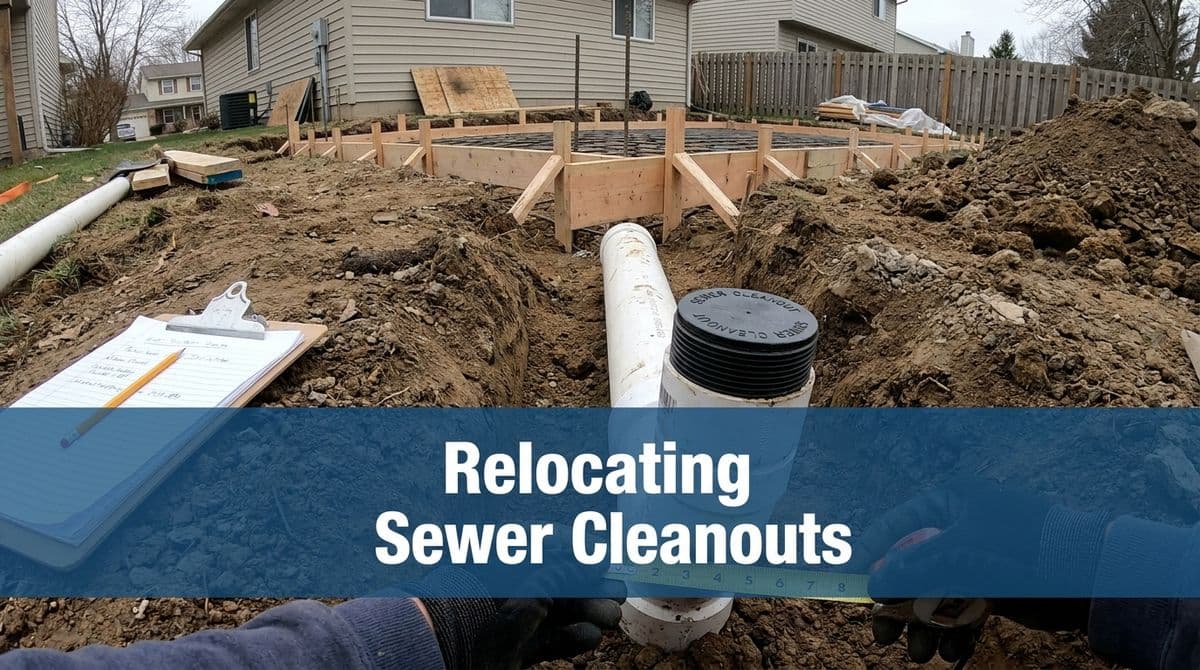
When Your Home Addition Lands on a Sewer Cleanout
We recently got a call from a homeowner — let’s call him Mark — who was getting ready to build a home addition in a mountain community. He’d already worked with his designer, had a good idea of the footprint, and then realized something big:
The new addition was going to sit right on top of his property’s main sewer cleanout.
Mark knew enough to realize he couldn’t just bury it and hope for the best, but he wasn’t sure what exactly needed to happen. Did we need to run a sewer camera? Could we just move the cap? Would he have to reroute the whole line?
If you’re planning an addition, deck, or garage and discovered a sewer cleanout in the way, you’re in the same boat Mark was in. Here’s how we walk homeowners and builders through relocating sewer cleanouts safely and to code.
Foundation vs. Property Cleanouts: What’s What?
On Mark’s call, one of the first things we clarified was which cleanout he was talking about. Most homes actually have two main cleanouts on the property:
- Foundation cleanout – The one closest to the building, typically just outside the foundation wall. This gives us access to the line as it leaves the house.
- Property (or yard) cleanout – Usually farther out toward the street or property line. This lets us access the line closer to where it connects to the city main or private sewer system.
In Mark’s case, the planned addition was going to sit over the property cleanout. That’s a problem because codes generally require cleanouts to be:
- Accessible (not under a slab, room, or permanent structure)
- Located at specific intervals and changes of direction
- At or near the surface, usually brought to grade or with an approved access box
Burying or enclosing a cleanout under an addition is almost always a code violation and a future headache.
Why You Can’t Just “Cap It and Forget It”
Homeowners sometimes ask if they can simply abandon or bury a cleanout when they build an addition or new deck. We strongly advise against that for a few reasons:
- Future clogs become expensive – Without easy access, clearing blockages may require cutting concrete, opening walls, or digging up finished landscaping.
- Inspection issues – If you’re pulling permits (and you should be for most additions), the inspector will expect properly located, accessible cleanouts.
- Resale complications – Hidden or non-functional cleanouts can raise red flags during inspections when you sell.
The right approach isn’t to eliminate the cleanout, but to relocate it properly so it remains usable and legal.
Step 1: Locate and Map the Existing Sewer Line
On the call, Mark wasn’t sure exactly what he needed — he just knew the cleanout was in the way. That’s where we usually start with a sewer camera inspection and line locating.
Here’s how that process typically works:
- We send a sewer camera down the existing cleanout or another access point.
- As we advance the camera, we use a locator above ground to trace the route of the sewer pipe.
- We mark the line’s path and depth on the surface (paint or flags), including any turns, connections, or problem areas.
Even if you think you know where the pipe runs, this step helps us:
- Confirm there are no unexpected bends right where you plan to relocate.
- Find the best new spot for a cleanout that’s outside the footprint of the addition.
- Identify any existing issues (sags, roots, breaks) to address while the line is exposed.
Step 2: Planning the New Cleanout Location
Once we know exactly where the line runs, we work with the homeowner and/or contractor to choose a new code-compliant location. Typically, we’re aiming for:
- Outside the new structure’s footprint – No cleanouts trapped under slabs, rooms, or permanent decks.
- Good access – Somewhere a technician can comfortably work with equipment.
- Proper spacing – In many areas, codes require cleanouts at certain distances and at major changes in direction.
For example, we might relocate the property cleanout:
- Farther toward the street or property line
- Off to the side of the new addition in a landscape bed
- Into a small valve box or enclosure that can be hidden in a yard or driveway but still be opened
Step 3: Excavating and Installing the New Cleanout
After planning, the physical work begins. A typical relocation looks like this:
- Excavate along the marked sewer line to expose the section where the new cleanout will go.
- Cut into the existing pipe at the chosen spot.
- Install a wye fitting or combo fitting to create a branch for the cleanout.
- Run a vertical section of pipe up to grade and install a new cleanout with threaded cap.
- Backfill and compact the soil properly, and if needed, install a cleanout box or cover to protect it and blend with the landscape.
If the original cleanout is being abandoned under the new addition, we’ll cap it properly and ensure all new work meets local plumbing codes.
Step 4: Verify Slope, Flow, and Code Compliance
You don’t want any surprises once the addition is built, so we always double-check:
- Proper slope – The sewer line still has the correct downhill pitch for good flow.
- Leak-free joints – All new fittings and connections are tight and tested.
- Cleanout orientation – The cleanout is angled correctly for rodding and jetting.
- Local code requirements – Location, size, and type of fittings all match what your jurisdiction requires.
On permitted projects, the inspector will often want to see the work before backfill or at least verify the new location. Coordinating this with your contractor keeps your project moving smoothly.
Tips If You’re Planning an Addition Near Your Sewer Line
If you’re where Mark was — planning a remodel and worried about sewer cleanouts — here are a few practical steps:
- Identify your cleanouts early – Before finalizing plans, walk the property and find any caps in the yard, driveway, or near the foundation.
- Loop in a plumber or sewer specialist during design – It’s much cheaper to adjust a drawing than to move an almost-finished foundation.
- Don’t assume you can just “go around” the line – Bends and reroutes may create future clog points if not planned correctly.
- Keep everything accessible – Even if it means a small access box in a patio or landscape bed, future you (and any future owner) will be grateful.
Need to Relocate a Sewer Cleanout Before Your Addition?
If your new addition, garage, or deck is about to land on top of a sewer cleanout, that’s the right time to bring in a professional. We can help you:
- Locate and map your existing sewer line with a camera
- Plan a code-compliant new cleanout location
- Handle excavation, installation, and inspections
Handled correctly, you’ll get the space you want and keep your sewer system serviceable and up to code — without nasty surprises down the road.