Pressure Test vs. Camera: Choosing Sewer Checks Before You Buy
Buying a home and worried about hidden sewer issues? Learn when you should choose a pressure test, a camera inspection, or both before closing.
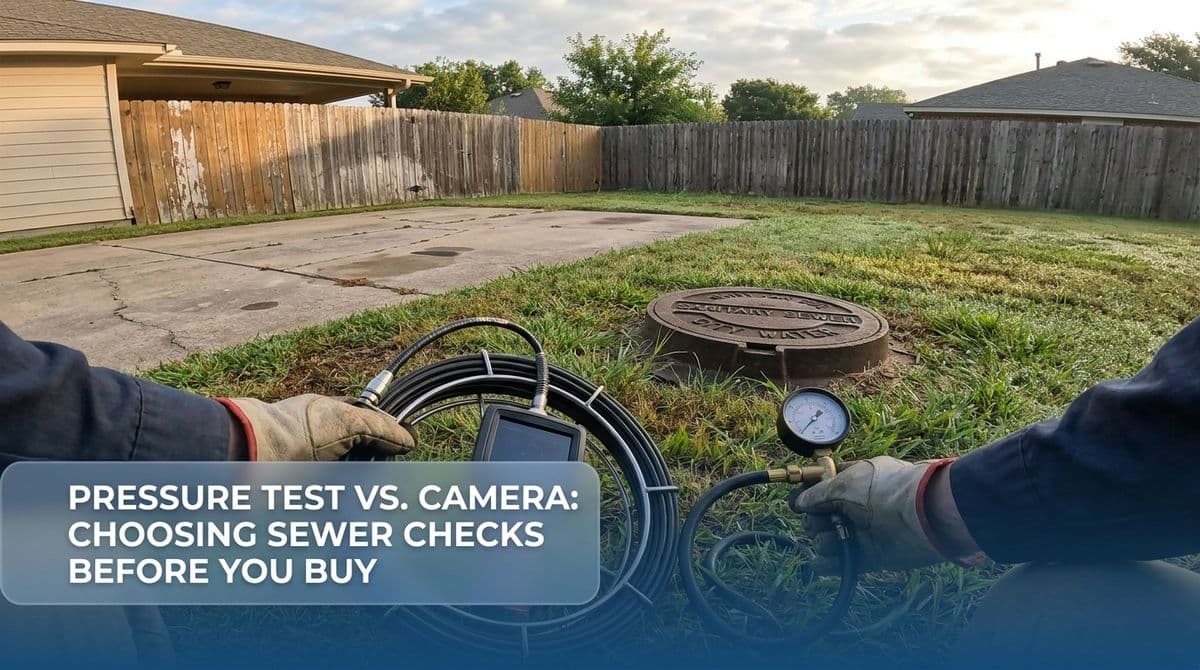
Pressure Test vs. Camera Inspection: A Real Buyer’s Dilemma
We recently got a call from a realtor — we’ll call her Lisa — who was helping buyers with a home in North Tahoe. The house had passed a sewer pressure test just four years ago, so technically it was cleared by the district. But Lisa’s clients were still nervous.
“They know it passed the test,” she told us, “but they’re worried something could have gone wrong since then. Should we do a camera scope just for peace of mind? Or is the old pressure test good enough?”
We walk buyers and agents through this exact question all the time. In areas like North Lake Tahoe, Truckee, and around the lake, sewer testing rules can be strict, confusing, and expensive — and no one wants a surprise sewer repair right after closing.
So we walk buyers and agents through the same explanation we gave Lisa: what a pressure test actually proves, what a camera inspection really shows, and how to decide which one (or both) makes sense before you buy a home.
What a Sewer Pressure Test Really Tells You
In districts like North Lake Tahoe, sewer pressure tests are usually triggered by a sale of the home. That means every time the property changes hands, the line gets tested again.
Here’s how a typical pressure test works in our area:
- We expose and open the property line and foundation cleanouts.
- We plug the line and pressurize it to a specific PSI (North Lake Tahoe requires 5 PSI).
- We hold that pressure for a set amount of time while watching the gauge.
North Lake Tahoe is actually one of the strictest around the lake: the line must hold 5 PSI for 15 minutes with no drop. Some nearby districts only require five minutes.
If the gauge doesn’t move, that tells us:
- The pipe is essentially airtight and watertight at that moment.
- No significant leaks are present along the tested section.
- No major root intrusions breaking through the pipe.
- Offsets bad enough to leak air are not present.
- Fittings are generally intact and not seeping under pressure.
So when a line passes a recent pressure test — especially in a strict district — the structural integrity of that line is usually in good shape.
What a Sewer Camera Inspection Shows (That Pressure Can’t)
Unlike pressure testing, a camera inspection (or “scoping”) lets us actually see inside the pipe. We feed a specialized camera through the cleanout and watch a live video feed from the sewer line.
A camera inspection can reveal things that don’t always cause a loss of pressure, such as:
- Bellies or sags – low spots where the pipe dips and water and toilet paper collect.
- Minor offsets – joints that are misaligned but still technically sealed.
- Early root intrusion – small roots that haven’t yet opened a leak.
- Grease build-up or debris that could lead to frequent backups.
We like to tell buyers: a pressure test tells you “Does it leak?” while a camera tells you “What does it look like and how might it behave?” Both are useful, but they answer different questions.
So Which Is Better Before You Buy?
When Lisa called about that North Tahoe home, the line had passed a pressure test four years ago. In our experience, if a line has passed in the last five years, it’s rare that something major has gone wrong since, unless there’s been obvious damage (construction, big landscaping projects, major settling).
Here’s how we usually help buyers and agents think it through:
When a Pressure Test Makes Sense
- You want the strongest possible evidence the pipe isn’t leaking.
- You’re in a strict district (like North Lake Tahoe) and want it on record for another 5–6 years.
- You’re negotiating repairs and need clear pass/fail documentation.
We can perform a pressure test with or without the district present. If the district is involved and it passes, it typically resets the clock so the line is “good” in their system for another several years. If it fails, repairs and a retest are usually required within a set timeframe — which is something to consider strategically during a real estate transaction.
When a Camera Inspection Makes Sense
- You want a visual record of the line’s condition.
- You’re worried about backups from bellies, sags, or debris, not just leaks.
- The home hasn’t changed hands much, so there may have been long stretches with no testing at all.
A camera scope won’t tell you if a fitting is barely seeping or if a joint leaks under pressure, but it is great for spotting conditions that can cause nuisance backups even if the line technically “passes.”
Our Honest Take for Anxious Buyers
For clients like Lisa’s — buying a home that passed a strict pressure test within the last five years — we usually explain it this way:
- Risk of a major hidden defect is low when a line passed recently in a strict district.
- A camera inspection adds peace of mind by showing what’s actually happening inside the pipe.
- Doing both tests together gives you the full picture and usually comes with a package discount.
In Lisa’s case, the buyers were mainly worried about unpleasant surprises after closing. They weren’t under any district requirement for a new test yet, but they wanted peace of mind. We recommended a camera inspection at minimum, and possibly a combined camera and pressure test if they also wanted fresh documentation on the line’s integrity to use in negotiations.
We also reminded them they could call the district to confirm the dates of any prior tests and inspections. If a home changes hands frequently, that usually means the sewer line has been looked at more often as well.
Not Sure Which Test You Need? Here’s Our Rule of Thumb
- No recent test on record and you’re in escrow: pressure test first, add a camera if you want visuals or if anything seems off.
- Passed a strict pressure test within ~5 years: camera scope for extra peace of mind; consider both if you want new documentation or suspect issues.
- Buying an older home that’s rarely sold: we strongly recommend both tests together.
If you’re in the middle of a purchase and feeling the same nerves Lisa’s clients felt, you’re not alone. We help buyers, sellers, and agents sort through these decisions every day, and we’re always happy to walk through options based on your specific property, district rules, and budget.