Planning Leach Field Expansions with Your Landscaping
Thinking about landscaping or a home addition on a septic property? Learn why and how to plan leach field expansions before you finish your yard.
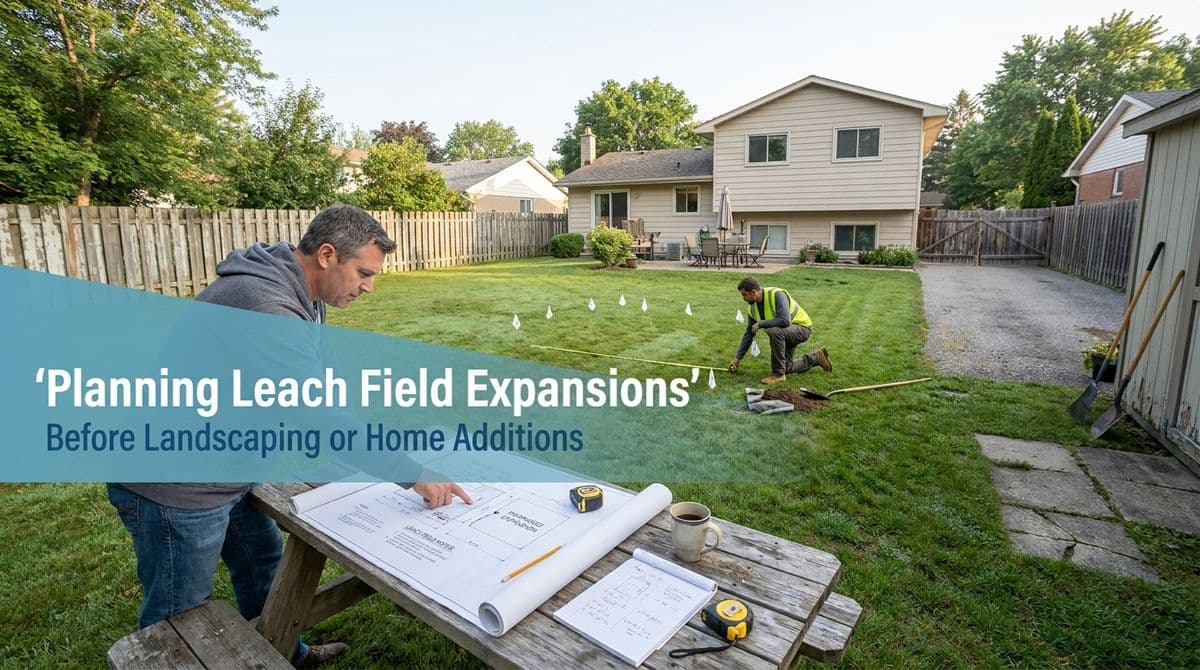
Planning Leach Field Expansions Before Landscaping or Additions
We recently got a call from a homeowner — let’s call him Brian — who was in a smart but tricky situation with his septic system in Truckee.
Brian had a brand-new septic tank and leach field installed for an ADU he built for his parents. The engineer had already designed an expanded leach field to eventually handle both the main house and the ADU, and the county had approved those plans. But when the system was first installed, only part of the leach field was built out.
Now Brian is talking with a landscaper and considering a future addition to the main house. His big question to us: “Should I extend the leach field now, before I invest in landscaping and a future addition… or wait?”
That’s a great example of the kind of planning most septic homeowners don’t think about until it’s too late — and their brand-new backyard has to be dug up again.
Why Leach Field Planning Matters Before You Build or Landscape
When Brian called, he was clear: his current leach field was working fine. This wasn’t about a system failure. It was about planning ahead for:
- A possible junior ADU or addition tied into the same septic
- Major backyard landscaping he didn’t want to redo
- County-approved plans for additional leach lines that weren’t built yet
We told him what we tell a lot of homeowners: there’s no sense in spending a bunch of money on landscaping just to pay again to tear it up and put it back later. If you’re thinking about expanding your home or adding more bedrooms, you want your septic system (and leach field) to be part of that plan.
How Counties and Engineers Look at Leach Field Capacity
In Brian’s case, the engineer had already done the hard work. Soil testing, system design, and leach field expansion plans were completed and submitted to the county. The county had already approved a larger system to support the potential future addition.
That’s a big deal, because leach field sizing is usually based on:
- Number of bedrooms the system will serve
- Soil conditions and percolation rates
- Local codes and health department requirements
Sometimes, like with Brian, the contractor installs only part of the approved leach field because the homeowners aren’t sure when they’ll move forward with the rest of the project. That’s not wrong — but it does create a planning fork in the road later on.
When It Makes Sense to Add Leach Lines Now
As we talked through Brian’s situation, we asked a key question: “Is the expansion already engineered and approved?” For him, the answer was yes. That meant the work to extend his field was fairly straightforward: two additional trenches, two more leach lines tying into the existing field, then backfill and done.
If you’re in a similar position, here are times it often makes sense to expand now rather than later:
- You have engineered and county-approved plans for extra leach lines.
- You’re about to do major landscaping over or near the leach area.
- You’re planning a home addition, ADU, or junior ADU in the next few years.
- Your existing system is adequate today but will need more capacity once you add bedrooms or fixtures.
In those cases, installing the extra leach lines now can save you from having to:
- Re-excavate a finished yard or patio
- Move or damage new hardscaping or irrigation
- Revisit engineering and permitting from scratch
Planning Your Yard Around the Leach Field
During Brian’s call, he mentioned he was working with a landscaper. That’s exactly when you want to loop us (or any septic professional) into the conversation. A few practical tips we shared with him apply to most septic properties:
- Know your leach field layout. Get a copy of the as-built or engineering drawings and mark the area in the yard.
- Avoid deep-rooted trees and shrubs over the lines; roots can damage pipes and clog the field.
- Skip heavy structures like decks, patios, sheds, or driveways over the leach area.
- Use shallow-rooted grasses or groundcover that won’t interfere with the system.
If you already know future leach lines are planned in a certain section of the yard, design your landscaping to work around that footprint. Or, like Brian, consider getting the leach expansion installed first so that area can be restored and landscaped once — not twice.
What to Do If You’re Considering an Addition or ADU
Brian’s call is a good reminder that septic planning should be part of any addition or ADU conversation from day one. If you’re even thinking about adding living space on a septic property, here’s a good sequence:
- Talk to a septic pro to evaluate your existing tank and leach field capacity.
- Hire an engineer to design any needed expansion and submit it to the county.
- Get approvals for the full, future build-out (even if you only install part now).
- Decide on timing: extend the leach field now or wait, based on cost and construction plans.
- Coordinate with your landscaper and builder so everyone is working from the same site plan.
Need Help Reviewing Leach Field Expansion Plans?
In Brian’s case, we told him to send over his engineered plans so we could review them and put together an estimate for adding the two extra leach lines. From there, he can weigh the cost now against the headache of tearing up a finished backyard later.
If you’re in a similar situation — new ADU, planned addition, or upcoming landscaping on a septic property — it’s worth a quick conversation and a site visit. A little planning now can save you a lot of dirt, dollars, and do-overs down the road.